Bangladesh’s Missed Moment: How Yunus’s Hesitation Let Mob Violence Take Hold

By

Aunul Islam, PhD (Imperial College, London, UK)

Source: New York Times, 15/08/2025

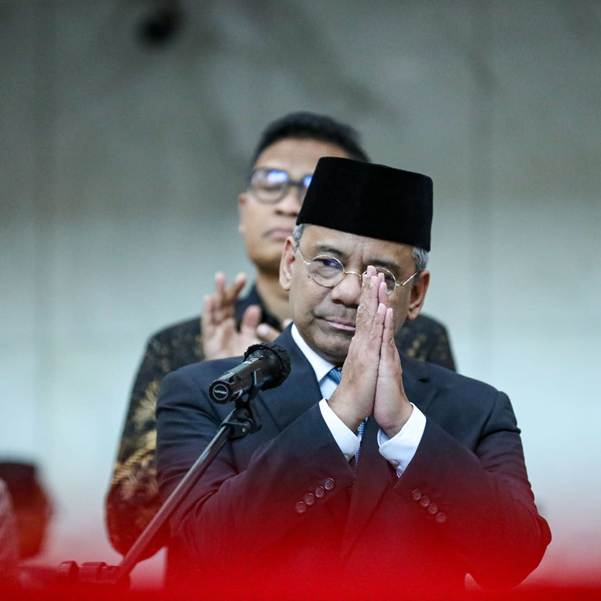
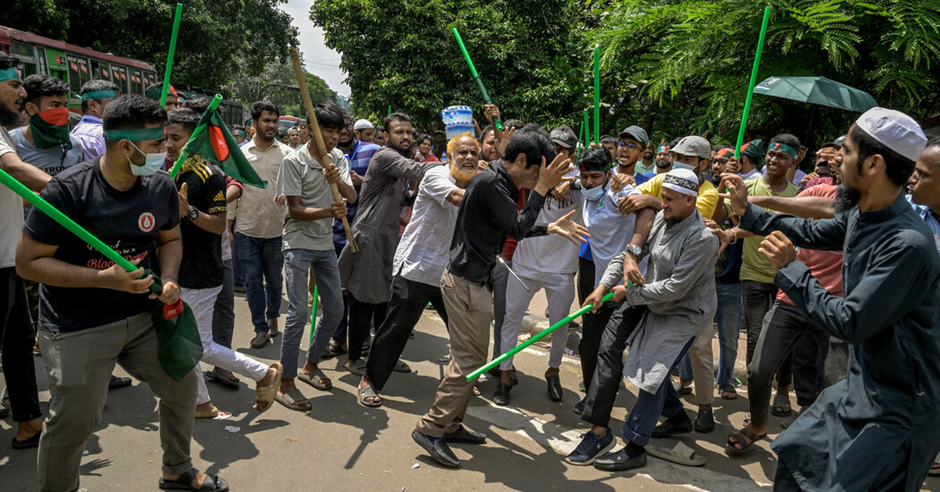
Bangladesh has endured political upheaval before. What made the recent interim period stand out was not protest or dissent, but the scale and normalisation of mob violence—vigilante attacks, public beatings, and political reprisals carried out openly. According to the European Agency for Asylum, Bangladeshi human rights organisations “…documented the highest rates of deaths due to mob beatings in a decade”. This did not happen because Bangladesh suddenly became more violent. It happened because, at a critical moment, authority hesitated. That authority was led by Professor Yunus, a Nobel laureate.

Interim governments exist for one primary reason: to stabilise the state during transition. They are not ceremonial caretakers. They govern during the most fragile phase of political life, when early decisions shape long‑term outcomes. In Bangladesh, that responsibility was not met.

Authority existed — and that is the point

The most important fact in this debate is often overlooked: the Bangladeshi state did not collapse during the interim period. Police forces remained in place. Courts functioned. The administration operated. International recognition was strong. Authority existed.

Political philosopher Hannah Arendt makes a distinction that is crucial here. Power, Arendt argues, rests on legitimacy and collective acceptance. Violence appears when that power is weakened or abdicated. When violence spreads, it is usually not a sign of popular empowerment, but of authority failing to act.

Seen this way, Bangladesh’s experience points to omission rather than inevitability. Leaders do not need to encourage violence to be responsible for its spread. Hesitation, delayed enforcement, and mixed signals are enough. In fragile institutional settings, restraint is rarely read as wisdom. It is read as permission.

How perpetrators of mob violence learned they enjoyed impunity

Sociologist Charles Tilly helps explain how this dynamic unfolds. He shows that mob violence is shaped by signals and incentives, not chaos. People watch what happens after the first incident. If early violence is punished quickly and consistently, it often subsides. If it is not, others follow.

Bangladesh fits this pattern. Analysts inside the country have pointed out that mob violence did not previously occur at this scale. Its expansion followed a familiar sequence: early incidents went insufficiently addressed, expectations of impunity formed, imitation followed, and violence became normalised. Each unpunished act lowered the threshold for the next.

Once this process begins, restoring order becomes far more difficult. By the time condemnations are issued, the street has already learned that enforcement is uncertain.

This was not inevitable

Defenders of the interim period often argue that the violence was unavoidable given the intensity of political change. That argument is weak. Transitions are volatile everywhere, but they also offer a narrow window where clear boundaries can be set. Early arrests, visible prosecutions, and unambiguous messaging can quickly shape behaviour. Bangladesh missed that window.

This is not a cultural story, and it is not about importing ideas from abroad. Modern democracies do not practise vigilantism. The issue is contextual misjudgement—applying restraint suited to strong institutional environments in a weak one.

The lesson and an anti-thesis of Arendt and Tilly

Bangladesh’s experience offers a stark lesson. Interim governments wield real power, even if temporarily. When that power is not exercised clearly and early, violence fills the gap. Arendt explains why violence signals failed authority. Tilly explains how inaction turns disorder into routine. Together, they show why mob violence in Bangladesh was not fate, but the result of a missed moment—and why accountability for that failure matters.

The above would partially explain according to Arendt and Tilly. The real reason is the disposition of the central character of the mob violence, Professor Yunus. It may sound preposterous but reflecting on his rule, or rather misrule, one can easily argue, that he came with a personal vendetta against the previous Government. He seized the opportunity to expand his own agenda of the Grameen group taking over many sectors. The mob violence was a “false flag” for him!

Viral Empire: How Microbes Reflect Human Power Structures

Source: https://grahamhancock.com/wattsp1/

Viral Empire: How Microbes Reflect Human Power Structures

By Aunul Islam, PhD (Imperial College, UK)

Modern power no longer operates primarily through borders or armies but through networks—supply chains, information flows, technology, and interdependence. In this sense, contemporary geopolitics resembles microbial systems more than traditional empires.

Microbes exert influence through connectivity, adaptation, and asymmetry. Small organisms can destabilise large systems by exploiting vulnerabilities, just as minor interventions can trigger outsized effects in a networked world. Power depends less on scale than on speed, positioning, and resilience.

Like microbes, political systems evolve under pressure. Expansion produces resistance, cooperation strengthens survival, and rigid structures fail in volatile environments. The greatest risk is not defeat by rivals but internal systemic collapse.

Seen this way, global power functions as a living ecosystem—adaptive, fragile, and continuously contested rather than permanently controlled.

In the above narration, the scientific expressions like mutation, virulence in the microbes behaviour have been translated in the business and strategic literature to relate them to humans. But this literature lacks sufficient emphasis on the destruction through wars and conflicts by humans on core aspects of their own life. This entails destruction of properties and other supporting elements such as hospitals, energy production etc.

At this juncture, the anti-thesis to above narratives is that human empire or a Supreme Empire do not adhere to the simple modalities in present day geopolitics. The present empire dictated by a lone country (USA) along with its lackeys is no longer a traditional empire as depicted previously. The viral empire like that of the bubonic plague or even the Covid-19 virus are now long forgotten past. The present Super Empire is best described as the worst of its kind, genocidal in nature and any other terms that can be used to describe it, where new words have to be added to the dictionary.

The last hope of the present world order is that the super empire does behave like a viral empire and succumbs to its own systemic collapse. Maybe this will happen in the next few decades!

Sent from my iPhone

The US military aggression in Venezuela and the abduction of Maduro: global reactions and Western ambivalence

On January 3, 2026, US President Trump announced via his social media account that a special operation ‘captured’ ( a euphemism for abducted) President Maduro of Venezuela and his wife and flew them over to the United States to face criminal charges for engaging in ‘narco-terrorism conspiracy, cocaine importation conspiracy, possession of machine guns and destructive devices and conspiracy to possess machine guns and destructive devices against the US’. The opening hearing took place on 5th January at a US Federal Court, with both Maduro and his wife defiantly claiming that they were kidnapped and not guilty, and that he remains the President of Venezuela. One can foresee a protracted legal battle ahead.

Source: https://www.nytimes.com/2026/01/03/world/americas/maduro-photo-trump.html

Trump was candid about his real intentions. The US administration would ‘run’ Venezuela until a viable and peaceful transfer of power to local authorities took place. Venezuela, which possesses the world’s largest oil reserves, would become, proclaimed Trump, the beneficiary of US technical and engineering prowess as leading energy companies embark on fixing the country’s dilapidated oil infrastructure. Wishful thinking? Probably.

Note that Trump left the Maduro regime intact, with the Vice President now constitutionally mandated to become acting President in the absence of Maduro. Trump also dismissed the possibility of the Nobel Prize-winning Machado leading the transition process, while failing to mention González, the Presidential candidate. This begs the question. What transition?

How has the global community reacted to these stunning developments? One does not need to be a legal expert to realize that the US military aggression in Venezuela that led to the abduction of Maduro and his wife is a brazen violation of international law and the UN charter. It also left at least 40 Venezuelans dead, including significant damage to private property and infrastructure. Yet, European leaders – supposedly the champions of international law and a rules-based global order have, once again, generally failed to acknowledge that in an unambiguous fashion. They are petrified to upset Trump and sought refuge in mealy-mouthed statements and carefully crafted obfuscation. Here are some notable examples, starting with the UK, which claims to enjoy a ‘special relationship’ with the USA.

Prime Minister Keir Starmer said the UK will discuss the “evolving situation” in Venezuela with U.S. counterparts while noting Britain will “shed no tears” about the demise of Maduro’s “regime”. This interview with Starmer from the British TV channel ITV is riveting to watch.

The EU expressed concern at the developments and urged respect for international law, even as it noted that Maduro “lacks legitimacy.”

French President Emmanuel Macron called for 2004 presidential candidate Edmundo Gonzalez Urrutia to lead a political transition. On the other hand, France said the U.S. operation undermined international law, and no solution to Venezuela’s crisis can be imposed externally.

German Chancellor Friedrich Merz said that Maduro had “led his country to ruin,” but called the U.S. action legally “complex.”

Italian Prime Minister Giorgia Meloni was the only major European leader to side with the U.S., arguing its military action in Venezuela was “legitimate” and “defensive.”

What about Canada? Well…

Prime Minister Mark Carney said on X that, “Canada has not recognized Maduro’s illegitimate regime since the 2018 electoral fraud. The Canadian government welcomes the opportunity now available to the Venezuelan people to access freedom, democracy, peace, and prosperity.”

He added, “True to its longstanding commitment to the rule of law, sovereignty, and human rights, Canada calls on all parties to respect international law. We support the sovereign right of the Venezuelan people to decide and build their own future in a peaceful and democratic society.”

And Australia?

Prime Minister Anthony Albanese has responded to the capture of Venezuelan President Nicolas Maduro by US forces. “The Australian government is monitoring the situation and will provide assistance to any Australians in Venezuela,” Mr Albanese said. “We urge all parties to support dialogue and diplomacy to secure regional stability and prevent escalation. “We continue to support international law.”

These mild and conditional utterances by Western leaders on what is clearly a breach of international law contrast sharply with what China and Russia had to say.

China delivered a strongly worded message to the United States on Monday (5th January) at an “emergency” meeting of the UN Security Council, calling on Washington to abide by international law, end its illusion that it is the world’s police force and court, and immediately release Nicolas Maduro and his wife.

Russia’s United Nations ambassador Vasily Nebenzya denounced US actions in Venezuela and urged the immediate release of detained Venezuelan President Nicolás Maduro during a United Nations Security Council session in New York on Monday, January 5.

India, on the other hand, appeared to adopt the Western strategy of obfuscation. Thus:

India broke its silence on the US capture of Venezuelan President Nicolás Maduro with a carefully worded statement that expressed “deep concern” but conspicuously avoided naming Washington or condemning the military strikes that seized the Latin American leader.

What about Venezuela’s regional neighbours? As expected, regional divisions emerged and reflected the ideological proclivities of different countries.

Argentine President Javier Milei, Trump’s ideological soulmate, characterized (the USA) as supporting “democracy, the defense of life, freedom, and property.”

“On the other side,” …are those accomplices of a narco-terrorist and bloody dictatorship that has been a cancer for our region.”

Other right-wing leaders in South America similarly seized on Maduro’s ouster to declare their ideological affinity with Trump.

In Ecuador, conservative President Daniel Noboa issued a stern warning for all followers of Hugo Chávez, Maduro’s mentor and the founder of the Bolivarian revolution: “Your structure will completely collapse across the entire continent.”

In Chile, where a presidential election last month marked by fears over Venezuelan immigration brought down the leftist government, far-right President-elect José Antonio Kast hailed the U.S. raid as “great news for the region.”

Left-wing presidents in Latin America — including Brazil’s Luiz Inácio Lula da Silva, Mexico’s Claudia Sheinbaum, Chile’s Gabriel Boric, and Colombia’s Gustavo Petro — expressed grave concerns over what they saw as U.S. bullying.

Lula said the raid set “an extremely dangerous precedent.” Sheinbaum warned it “jeopardizes regional stability.” Boric said it “violated an essential pillar of international law.” Petro called it “aggression against the sovereignty of Venezuela and of Latin America.”

In sum, global reaction to Maduro’s abduction by the US has been quite diverse, but one is struck by the muted response of Europe and other leaders from the West. They will face a stern test if Trump follows through on his threat to invade Greenland and forcibly take it away from Denmark. Certainly, the Danish intelligence service, traditionally a close American ally within the framework of NATO, is so worried that it has officially designated the United States as a ‘security risk’.  

Mamdani wears the ‘bad Muslim’ badge as a badge of honour and scores a famous electoral victory

Zohran Mamdani prevailed over Andrew Cuomo in the mayoral election of New York City (NYC) held on November 4. Cuomo, a former governor of New York state and, more importantly, a scion of the Democratic Party establishment, was easily beaten by someone who was virtually unknown a year ago. A third Republican candidate, Curtis Sliwa, became a rather distant third.

Young, energetic, and infused with a great deal of personal charm and charisma, Mamdani demonstrated an exceptionally high degree of oratorical skills.  He has an uncanny ability to connect with a diverse constituency.

Mandani’s election victory is as improbable as it is memorable. He is indeed destined for the history books. At 34, he is the youngest NYC mayor in over a century and the first one since 1969 to get over a million votes. Cuomo, despite being disgraced by allegations of multiple instances of sexual misconduct, decided to run for the mayoral election as a Democratic nominee, only to find that it was the unknown Mamdani who ousted him in the primaries. Cuomo, driven by pure ambition and a sense of entitlement, decided to run as an independent only to be defeated, yet again, by a seemingly upstart politician.

Mamdani is also the first-ever Muslim mayor of the largest city in the United States. He was born in Uganda to parents with Indian heritage. His mother, Mira Nair, is a globally well-known filmmaker. His father, Mahmood Mamdani, is a distinguished political scientist and anthropologist who teaches at Columbia University in his capacity as a Professorial Chair.

Mira Nair

Mahmood Mamdani

Mamdani used his religious identity like a badge of honour that reflects both his political acumen and a deep commitment to fighting Islamophobia that has become rampant in US and Western political discourse. In doing so, Zohran Mamdani seems to have been inspired by one of his father’s provocative scholarly contributions, where the author makes a distinction between ‘bad’ Muslims and ‘good Muslims’.

‘Bad Muslims’ are seen as inherently anti-American and antisemitic. They are both despised and feared as ‘Jihadists’ who reject Western hegemony. They are prepared to fight an interminable war, through acts of terrorism, against both Israel and its Western allies. ‘Good Muslims’, on the other hand, are supposed to be secular and westernised and fully prepared to accept Western hegemony. They lead quiescent lives as law-abiding citizens in both the Western and Muslim worlds. They seek to remain, as Zohran Mamdani put it, ‘in the shadows.’

In the official ‘war on terror’ that was launched by the Bush administration in the wake of 9/11, the underlying premise is that good Muslims need to be separated from bad Muslims through a combination of coercion and co-option. This is how anti-Americanism and antisemitism can be durably defanged. Hence, the rise of ‘Homeland Security’ (with a current budget of US$411 billion +) and a high surveillance society primarily targeting Muslims in the US-led West. Islamophobia became the norm rather than the exception.

Zohran Mamdani is certainly secular and ‘Westernised’ in the sense that he was largely educated in the United States. Still, he is prepared to step out of ‘the shadows’ by embracing the anti-establishment ethos of the ‘bad Muslim’. He openly supports the Palestinian cause and decries the genocide committed in Gaza by Israel. He uses this narrative to reinforce his ‘Democratic Socialist’ credentials where he seeks to improve the living conditions of ordinary New Yorkers through concrete measures, such as affordable rental accommodation, free public transport and universal childcare financed by modestly increased taxation of the top 1 percent of affluent New Yorkers and raising the corporate tax rate to match the rate prevailing in the neighbouring state of New Jersey.

Timorous centrist politicians in the Democratic Party must have regarded Zohran Mamdani as a misguided novice who faced certain political oblivion in a city that had the largest number of Jews outside Israel and the largest number of billionaires (more than 120) in the world in a single city. They would have chortled with derision. How could he spout anti-Israeli rhetoric, seek to tax the rich, and demonstrate his Muslim credentials?

It seems that Zohran Mamdani had the last laugh against his detractors. He read the mood of the electorate much better than his Democratic fellow travellers. More than 30 per cent of Jewish New Yorkers voted for Mamdani – no mean feat for someone painted as a Jew-hating politician. As he observed in his victory speech:

“I am Muslim. I am a democratic socialist. And most damning of all, I refuse to apologise for any of this.”

Of course, Zohran Mamdani has a long journey ahead. His powerful political opponents, including President Trump, will not quietly accept the electoral verdict. After all, multiple billionaires poured more than US$40 million into Andrew Cuomo’s campaign coffers. The pro-Israeli lobby will not wither away. Anti-Mamdani forces will be relentless in discrediting and vilifying a politician who is both a ‘socialist’ and a ‘bad Muslim’. Will they prevail? Only time will tell.

‘From one nobel laureate to another’: the embarrassing naivete of Yunus

Yunus, the 2006 Nobel Peace Prize winner and currently Chief Adviser of the Bangladesh Interim Government, could not contain his proclivity for both publicity and magnanimity when he learned that a Venezuelan politician, Ms. Maria Corina Machado, had been awarded the Nobel Peace Prize for 2025. Bangladesh’s leading English language daily, the Daily Star, reported that Yunus was effusive in his praise of Machado. The congratulatory message that he sent reads as follows.

“I extend my hearty congratulations to María Corina Machado on receiving the 2025 Nobel Peace Prize for her courageous fight for democracy in her beloved Venezuela,” he said in a congratulatory message.

Machado has faced oppression with steadfast resolve, never wavering in her commitment to a freer and more just future for her country and her people, the message read.

As the Nobel Committee rightly stated: “Democracy depends on people who refuse to stay silent, who dare to step forward despite grave risk, and who remind us that freedom must never be taken for granted, but must always be defended — with words, with courage, and with determination.”

She has dared to imagine a better world and worked tirelessly to make it so, the message added.

There is, unfortunately, a contentious and even dark side to Machado, the apparently fearless fighter for democracy in Venezuela. She happens to be a pro-Zionist, pro-Trump, far-right politician who is happy to stand shoulder to shoulder with notorious Islamophobic racists, such as Marie le Pen of France and Geert Wilders of the Netherlands. This prompted CAIR – a leading Muslim organization – to issue the following proclamation.

“We strongly disagree with the Nobel Prize committee’s decision to award this year’s peace prize to Maria Corina Machado, a supporter of Israel’s racist Likud Party who earlier this year delivered remarks at a conference of European fascists, including Geert Wilders and Marie Le Pen, which openly called for a new Reconquista, referencing the ethnic cleansing of Spanish Muslims and Jews in the 1500s.

“We call on Ms. Machado to renounce her support for the Likud Party and anti-Muslim fascism in Europe. If she refuses to do so, the Nobel Prize committee should reconsider its decision, which has undermined its own reputation. An anti-Muslim bigot and supporter of European fascism would have no place being mentioned alongside the likes of Dr. Martin Luther King, Jr., and other worthy winners of the Nobel Peace Prize.”

“The Nobel Peace Prize committee should instead recognize an honoree who has shown moral consistency by bravely pursuing justice for all people, such as one of the students, journalists, activists, medical professionals who have risked their careers and even their lives to oppose the crime of our time: the genocide in Gaza.”

In her own region of Latin America, the reaction to her winning the award was mixed. As AA reports:

“The Nobel Peace Prize being awarded to Venezuelan opposition leader María Corina Machado on Friday drew mixed reactions in Latin America, with some leaders offering praise, strong condemnation by others, Mexico choosing to remain silent.

The announcement of the award had some pointing to her past rhetoric and actions, which were characterized as violent or supportive of foreign intervention.”

Machado’s Trumpian loyalty became evident when she dedicated her award to “the suffering people of Venezuela and to President Trump for his decisive support of our cause.” At a time when there was feverish speculation and intense lobbying for Trump to get the 2025 Nobel Prize for his ostensible role as global peace maker, Machado – the seemingly surprise winner of 2025 – made sure that Trump noted her subservience.

Given the controversy surrounding Machado, why did Yunus decide to issue such fulsome praise for the 2025 Nobel Peace Prize winner? What was his bevy of advisers doing? Alas, this represents embarrassing naivete on the part of Yunus and dereliction of duty on the part of his advisers. Yunus, given his age, is well past his prime and does not seem to engage in due diligence before making public proclamations on global issues. Sadly, someone who heads the government of a Muslim majority country ends up supporting an anti-Muslim racist. Yunus could have simply kept quiet, just as the President of Mexico did.