Blog

US and Europe: the end of the transatlantic alliance as we know it?

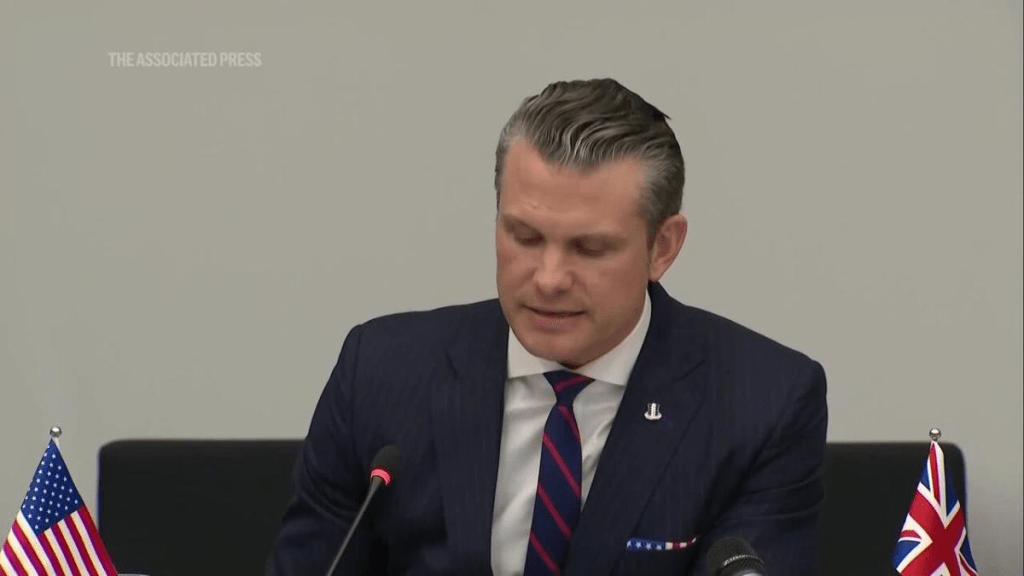
The newly appointed US secretary of defence, Pete Hegseth, made his inaugural speech to NATO and European allies at a Defence Ministerial on February 12. As a Trump loyalist, he conveyed his forthright message to an august audience. His speech was received in stony silence by grim-faced European officials and politicians.

Exhibit 1: Hegseth speaks to NATO allies…

His proclamations portend a major rupture in the transatlantic alliance that has endured since the 1950s. Thus:

  • European security should be the sole responsibility of Europe
  • Rich European countries should not expect the US to continue to act as Europe’s security guarantor through NATO
  • These countries should aim to spend 5% of GDP on defence even if the US does not.
  • The priorities of USA lay in Asia and in securing its own borders against millions of illegal migrants seeking to enter the USA from South America.

Perhaps the most conspicuous statements by Hegseth pertained to the way the US perceives the future of Ukraine.

Thus:

  • It is unrealistic to expect Ukraine – and Europe at large – to return to ‘pre-2014 borders’, that is, Russia can expect to retain Crimea and probably the vast bulk of Ukrainian territory that it has acquired since the Russo-Ukraine war that started on February 24, 2022
  • It is unrealistic to expect Ukraine to become a member of NATO.
  • Any ceasefire agreement between Russia and Ukraine would have to be monitored by European and non-European troops – but not NATO and certainly not by the USA.

There were understandably adverse reactions from Europe, although the British Defence Minister, evoking the long-standing British tradition of understatement, simply said to Hegseth, ‘we hear you’.

President Zelenskyy was clearly crestfallen but put on a brave face. This did not restrain the editor of the Kyiv Post from lamenting that God Bless ‘America,’ but God Help Ukraine and Europe Fend for Themselves!

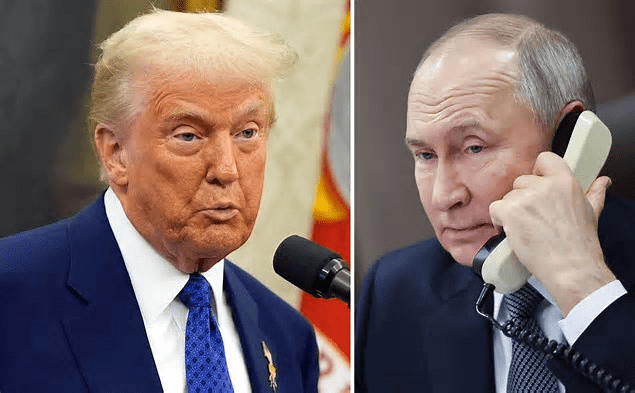
European and Ukrainian fears were exacerbated when Trump held a telephone discussion for 90 minutes with Putin. Both leaders agreed that they should meet at a summit in Saudi Arabia where they would finalize the contours of a ceasefire plan that clearly favoured Russia. The embattled Zelenskyy was given a consolation prize by receiving Trump’s post-Putin courtesy phone call.

Exhibit 2: Trump and Putin talkfest

Trump sought from Ukraine a formal agreement to gain preferential access to its rich mineral deposits which he saw as richly deserved compensation for the billions that the USA poured into Ukraine to fight Russia.

Trump also noted that Putin was right to raise concerns about Ukraine not joining NATO as far back as 2007. He felt that Russia should be part of the G7.

Russo-phobic European leaders were apoplectic but there was little that they could do to stop the Trump juggernaut on the ‘America First’ foreign policy that was taking shape in front of their disbelieving eyes. What happened, they wondered, to commitments by the previous US administration that said that Ukraine was on an ‘irreversible’ path to NATO membership? What happened to Biden’s promise that Ukraine would receive its unconditional support and poured billions into sustaining its proxy war against Russia even during the dying days of his administration?

The US Vice President, JD Vance, went even further than Trump and Hegseth. He noted that an enormous and probably unbridgeable chasm has opened between Europe and USA. It was a clash of views and values about the world at large. Unless centrist politicians in the region respected views and voices of American, MAGA-inspired nationalism in Europe, America had nothing to do with Europe. To Vance and fellow travellers, the far-right AfD in Germany was worthy of an audience but not Olaf Scholz, the beleaguered German chancellor. He and his entourage did not even bother to listen to speeches by French President Macron and the EU president Ursula Von der Leyen.

Exhibit 3: Vance issues a stern lecture to European leaders….

It is remarkable that, in the space of a few days, the Trump administration appears to have reconfigured the basic tenets of the transatlantic alliance that was consolidated during the Cold War. It is pathetic to watch Zelenskyy take on the mantle of European leadership. He made the delusional proclamation of forming a formidable European army in which Ukraine would play a pivotal role to deter Russian aggression in the absence of any tangible support from USA.

The harsh reality is that the European leaders allowed themselves to become subservient to the US and simply followed the Russo phobic policy of previous US administrations that reached its zenith under Biden. They tried hard to cling to the fantasy that Russia really does not belong to Europe and that it ought to be isolated and defeated diplomatically economically and militarily even if it means pouring billions into broken nation like Ukraine – billions that could have been spent on the welfare of European citizens. Along comes someone like Trump and ruptures such a fantasy.

Democracy promotion, regime change and US foreign policy: The case of Bangladesh

On August 5, 2024, a student-led movement toppled Sheikh Hasina’s deeply entrenched authoritarian regime. The redoubtable Economist magazine voted Bangladesh ‘the country of the year’ (2024) because students led a movement that ‘toppled a tyrant’ and paved the way for a brighter future.

Do the student leaders really deserve such praise, or was there the not-so-hidden hand of external forces?

It is reasonable to argue that the legitimacy of a home-grown pro-democracy movement is impaired when it is co-opted by powerful external actors whose geopolitical considerations might not be aligned with a country’s national interest.

The Economist is silent on this issue, and there is hardly any national debate on this vexed question, perhaps because the media is still not free in the post-Hasina era.

The prime suspect that aided and abetted the expulsion of the Hasina regime is the USA.  This proposition is supported by a combination of historical records and circumstantial evidence.

To find out more, follow this link:

Democracy and the West – giving James Bond 007 licence to kill?

Democracy and the West – giving James Bond 007 licence to kill?

By

Aunul Islam

Aunul Islam, read for his PhD at Imperial College, London. He graduated from The University of Manchester. He is a Quality Assurance Specialist in Higher Education and a Technology Consultant. He is an ex-civil servant of the UK government. A keen gardener, he finds solace through nature in this dysfunctional world orde

Exhibit 1

Source: bing.com

Have we really understood what has democracy given us? Let us revisit the basic meaning of democracy.

The word’s etymology is derived from Greek, “demos” meaning “people” and “Kratos” meaning “power.”

Democracy is a system of government in which laws, policies, leadership, and major undertakings of a state or other polity are directly or indirectly governed by the people.

It is also often referred to as the “rule of majority. There have been multiple ways in which democracy has been defined and described.

The present dysfunctional democratic governance of powerful Western countries that we are witnessing made me reflect on democracy through the understanding of a writer and his films that followed: the James Bond film, entitled  “Licence to kill”, which resonates with the present democratic world order.

I will briefly narrate the basis of Ian Fleming’s book and associated films and finally discuss how they relate to the so-called new democratic world order.

James Bond, bearing the unique code 007, is a secret service agent of a democratic British Government, with other important characters like Q and M, which are code names in the actual British secret service. Where necessary, 007 has the licence to eliminate enemies within his own country and worldwide.

If we believe in a true democracy, and there are many variants of this, the UK parliament is in no way similar to the USA system nor they are to the European one with proportional representation.  A mere popular vote of 30% may take a political party in a ruling position and thus it is not the majority. So, any major decision taken for its own citizens is not truly democratic. To make things worse in governance, the cabinet in the UK makes the decision. The fallacy is having an autocratic leader ( Tony Blair, Boris Johnson, etc) bulldoze a decision detrimental to society and make a mockery of democracy.  The worst scenario is the “license to kill” in an overseas country if they feel that they are “undemocratic” or do not align with their beliefs and strategies.

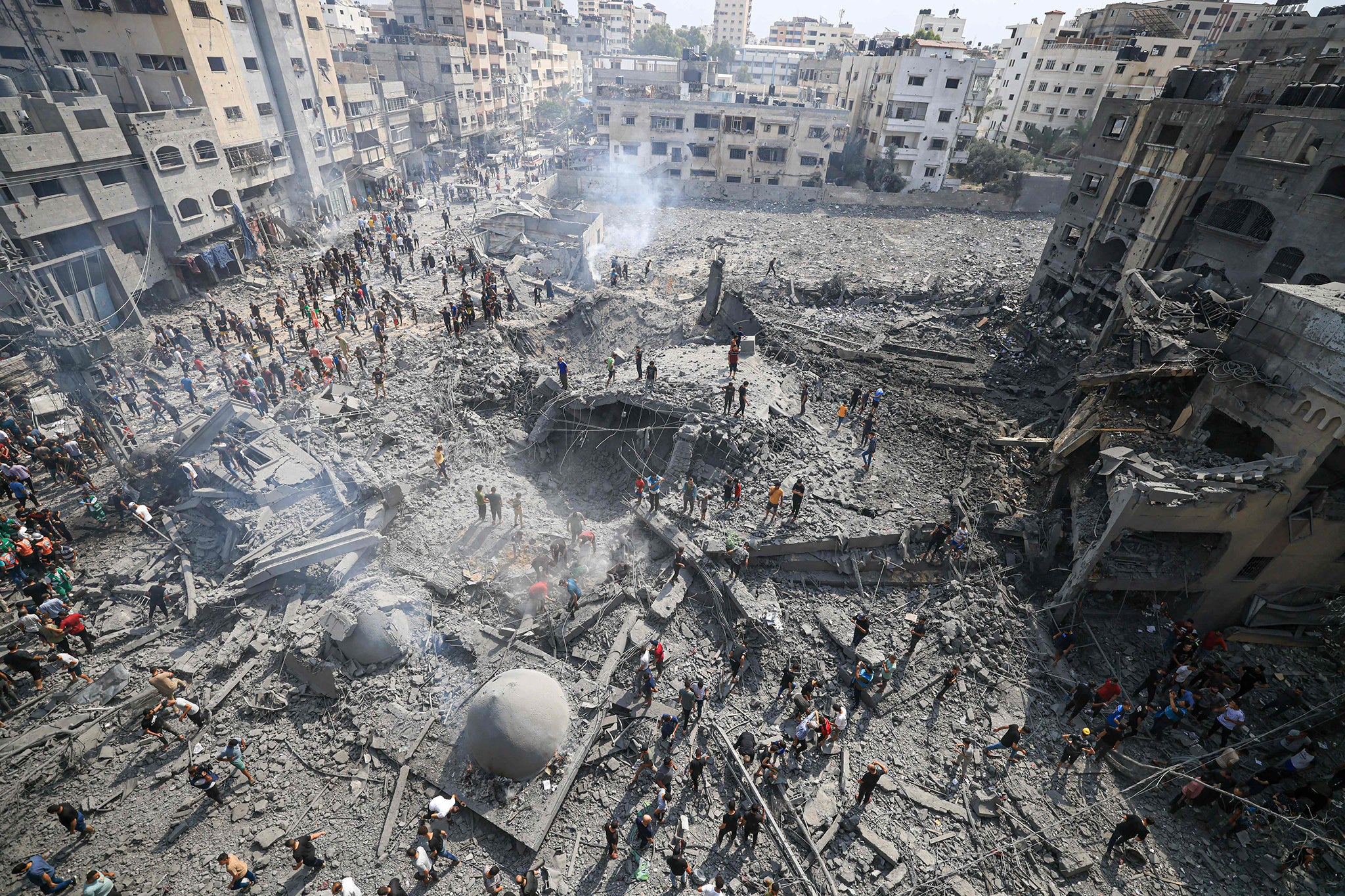
Many examples of undemocratic intervention, even bypassing the UN, abound. A glaring example is the invasion of Iraq.  The genocide in Gaza by the so-called democratic State of Israel is the latest egregious example of licence to kill. The list goes on. Democracy and double standards are in conspicuous display. One is witnessing millions being slaughtered, killed and maimed around the world, where USA, the leading democratic nation, felt it “necessary” and others are complicit by means of abhorrent participation either directly or indirectly.

Exhibit 2: an iconic image from the invasion of Iraq 2003 by US and its allies

Source: Al Jazeera

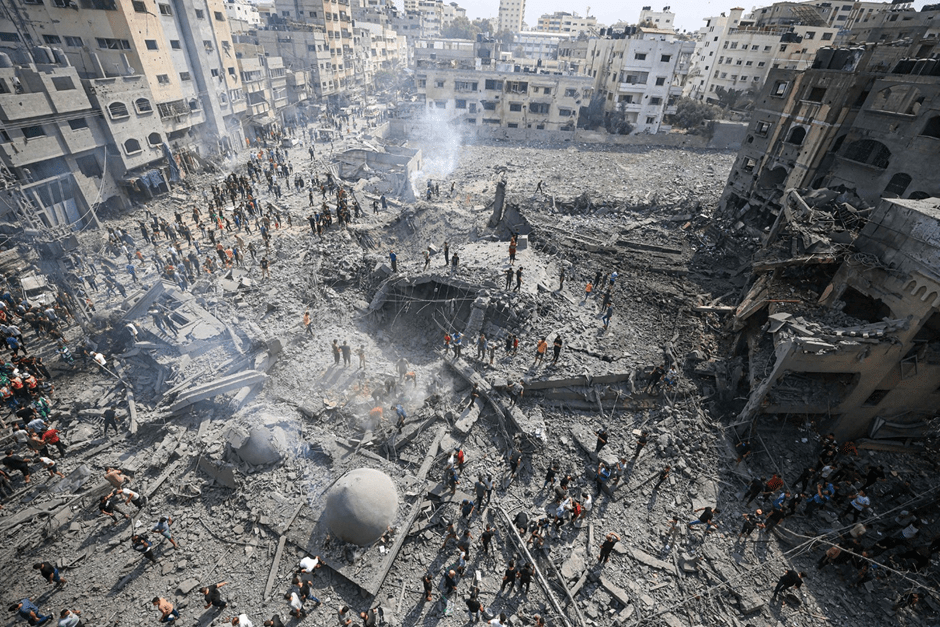
Exhibit 3 Democratic’ Israel creates the ruins of Gaza

Source: The Independent

As we dawn into the year 2025, it is painful to envision a world led by democratic countries and their governance beyond its own borders, where the 007, the M and Qs are the agents of destruction in a world full of ever-growing conflict!

K-drama – saga in the South Korean parliament

By

Aunul Islam

Aunul Islam, read for his PhD at Imperial College, London. He graduated from The University of Manchester. He is a Quality Assurance Specialist in Higher Education and a Technology Consultant. He is an ex-civil servant of the UK government. A keen gardener, he finds solace through nature in this dysfunctional world order.

The drama that took place in the recent Korean parliament on 4th of December 2024 as martial law was declared by President Yoon ended, to echo T.S. Eliot, in a whimper.

This is the way the world ends
Not with a bang but a whimper.

The so-called martial law in South Korea lasted a mere six hours. It reminds me of a K-drama, “crash landing on you.”  

This is a romantic story between two Koreas. Why trivialise a potentially grave political event by trying to interpret it through the lens of a very popular k- drama?

Sometimes dramas carry a larger message than one gives them credit. Many have analysed this event from various angles – see, for example, BBC news,4th December 2024, Laura Bicker, reporting from Seoul.

Source: BBC, President Yoon Suk Yeol faces impeachment vote after martial law backlash – BBC News

Let us go back in history. Do you remember the unification of Germany?  The two have a common factor. East Germany was a communist bloc and here, the North in case of Korea.

Was the drama (Crash Landing) fantasising on the unification of both Koreas?

West Germany gained a lot by the unification, with a dedicated and skilled workforce with a different socio-working ethos. The unification was a boon for the West as strategically it gained a large work force while at the same time neutralising the threat of Communism from the East.

Let us revisit the K-drama, “crash landing on you”, to briefly analyse the saga that unfolded in the Korean parliament. A rich woman from Gangham (which also reminds me of the very popular song Gangham style) in Seoul, whilst paragliding and by a freak accident landed in the military border town of North Korea. The drama was portrayed in a politically correct and balanced way as it appeared that the writer did not want to generally demean the North Koreans. I also feel it had the blessings of The Ministry of Unification a government body responsible for all issues on inter-Korean relations. The ministry’s existence reflects the unique reality of the Korean peninsula, which has remained divided since the end of the Korean War in 1953.

The drama showed impoverished and poor living conditions in the military border town of North Korea, but it portrayed the people as resolute and proud of their communism.

What has happened in the South Korean parliament has convinced me to look at contemporary political developments in that country through the prism of K-drama.

There are many who dream of a united Korea and of course many are against it. Recently the Korean Won has devalued, and the golden period of capitalism is perhaps no longer that bright. Against this backdrop, the present government wanted a scapegoat, and the influence of North Korea had to be blamed. Although democracy prevailed and the martial law failed to materialise, it does not necessarily augur well for the future of South Korea.

Will we see a unification of the Koreas like Germany in the future?

The governance of central banks and monetary policy committees: are they too narrowly constructed?

A modern central bank usually relies on ‘monetary policy committees’ or MPCs (albeit with different names, such as boards and councils) that play a pivotal role in the conduct of monetary policy. The collective deliberations of the MPCs are held regularly throughout the year and are geared towards recommendations (either by vote or consensus) on the setting of the policy rate.

The core principle is that the practice of monetary policy – and hence the role of the MPCs – should be free of political pressure. Central banks should be accountable but have operational independence in pursuit of their primary goal of maintaining price stability.

The size of the MPCs and the decision-making structure varies across countries and regions as shown below (Table 1). The MPCs are dominated by internal bank staff and economists, and, in some cases, with representatives from the corporate world. There are also cases in which there are no external members. There is no scope for representatives of workers and employers and representatives from civil society to be part of the membership of MPCs.  

Table 1: Composition of MPCs, selected central banks

Source: https://rbareview.gov.au/sites/rbareview.gov.au/files/2023-04/rbareview-paper-gai.pdf

The degree of gender parity is low in a typical MPC. India is a conspicuous example – see Exhibit 1. Would improving gender parity improve the quality of monetary policy as measured in terms of maintaining price stability? Research findings on this are ambivalent, but the aim is to use an august institution to promote gender equality which is a core element of the global development agenda.

Exhibit 1: Where have all the women gone? The Governor of the Reserve Bank of India meets with members of the MPC

Despite the restrictions placed on central banks that restrain them from broad-based community-level engagement, these entities have tried to overcome such restraints by a transparent communications strategy in which deliberations of MPCs are made public. Furthermore, in recent years central banks have moved away from a preoccupation with price and financial stability. One important example of this trend is a new form of engagement via international cooperation among central banks, most notably supporting climate action as a key aspect of monetary policy. This is best illustrated by the ‘Network for Greening the Financial System’ (NGFS) which now has 134 members.

Financial inclusion is another way in which central banks are changing their engagement with workers and employers and the broader community. As is well known, the aim of financial inclusion is to incorporate the unbanked segment of the population – which can be quite large in developing countries – into the formal financial system. A 2024 meta-analytical assessment shows that ‘…financial inclusion outcomes reflect small, positive and statistically significant average effects on consumption, income, asset and other poverty-related indicators. Given this finding, it is noteworthy to point out that the ‘Alliance for Financial Inclusion’ reports that there are now 84 central banks across the world that have formally integrated financial inclusion in their mandates.

Financial inclusion creates synergies between monetary policy and poverty reduction strategies as well as the agenda of transition to formality. Central banks have discovered that financial inclusion, by encouraging formalization, improves the monetary transmission mechanism and thus strengthens the effectiveness of monetary policy. This in turn creates the space for workers and employers as well as civil society at the domestic level to engage with monetary authorities in areas that go beyond price stability.