Offers succinct commentary on topical issues that cut across both rich and poor countries. Entails critical insights on poverty, inequality, health, macro-policies and many more
Author: Yan
I am an Adjunct Professor, Griffith Asia Institute, Griffith University, Brisbane, Australia. I am also a former Chief, Labour Market and Employment Policies Branch, ILO, Geneva. I was educated as an economist at Manchester, Western Ontario and Cambridge. I am one of the founding editors of the Journal of Asia Pacific Economy (Routledge, London and New York).
Yunus, the 2006 Nobel Peace Prize winner and currently Chief Adviser of the Bangladesh Interim Government, could not contain his proclivity for both publicity and magnanimity when he learned that a Venezuelan politician, Ms. Maria Corina Machado, had been awarded the Nobel Peace Prize for 2025. Bangladesh’s leading English language daily, the Daily Star, reported that Yunus was effusive in his praise of Machado. The congratulatory message that he sent reads as follows.
“I extend my hearty congratulations to María Corina Machado on receiving the 2025 Nobel Peace Prize for her courageous fight for democracy in her beloved Venezuela,” he said in a congratulatory message.
Machado has faced oppression with steadfast resolve, never wavering in her commitment to a freer and more just future for her country and her people, the message read.
As the Nobel Committee rightly stated: “Democracy depends on people who refuse to stay silent, who dare to step forward despite grave risk, and who remind us that freedom must never be taken for granted, but must always be defended — with words, with courage, and with determination.”
She has dared to imagine a better world and worked tirelessly to make it so, the message added.
There is, unfortunately, a contentious and even dark side to Machado, the apparently fearless fighter for democracy in Venezuela. She happens to be a pro-Zionist, pro-Trump, far-right politician who is happy to stand shoulder to shoulder with notorious Islamophobic racists, such as Marie le Pen of France and Geert Wilders of the Netherlands. This prompted CAIR – a leading Muslim organization – to issue the following proclamation.
“We strongly disagree with the Nobel Prize committee’s decision to award this year’s peace prize to Maria Corina Machado, a supporter of Israel’s racist Likud Party who earlier this year delivered remarks at a conference of European fascists, including Geert Wilders and Marie Le Pen, which openly called for a new Reconquista, referencing the ethnic cleansing of Spanish Muslims and Jews in the 1500s.
“We call on Ms. Machado to renounce her support for the Likud Party and anti-Muslim fascism in Europe. If she refuses to do so, the Nobel Prize committee should reconsider its decision, which has undermined its own reputation. An anti-Muslim bigot and supporter of European fascism would have no place being mentioned alongside the likes of Dr. Martin Luther King, Jr., and other worthy winners of the Nobel Peace Prize.”
“The Nobel Peace Prize committee should instead recognize an honoree who has shown moral consistency by bravely pursuing justice for all people, such as one of the students, journalists, activists, medical professionals who have risked their careers and even their lives to oppose the crime of our time: the genocide in Gaza.”
In her own region of Latin America, the reaction to her winning the award was mixed. As AA reports:
“The Nobel Peace Prize being awarded to Venezuelan opposition leader María Corina Machado on Friday drew mixed reactions in Latin America, with some leaders offering praise, strong condemnation by others, Mexico choosing to remain silent.
The announcement of the award had some pointing to her past rhetoric and actions, which were characterized as violent or supportive of foreign intervention.”
Machado’s Trumpian loyalty became evident when she dedicated her award to “the suffering people of Venezuela and to President Trump for his decisive support of our cause.” At a time when there was feverish speculation and intense lobbying for Trump to get the 2025 Nobel Prize for his ostensible role as global peace maker, Machado – the seemingly surprise winner of 2025 – made sure that Trump noted her subservience.
Given the controversy surrounding Machado, why did Yunus decide to issue such fulsome praise for the 2025 Nobel Peace Prize winner? What was his bevy of advisers doing? Alas, this represents embarrassing naivete on the part of Yunus and dereliction of duty on the part of his advisers. Yunus, given his age, is well past his prime and does not seem to engage in due diligence before making public proclamations on global issues. Sadly, someone who heads the government of a Muslim majority country ends up supporting an anti-Muslim racist. Yunus could have simply kept quiet, just as the President of Mexico did.
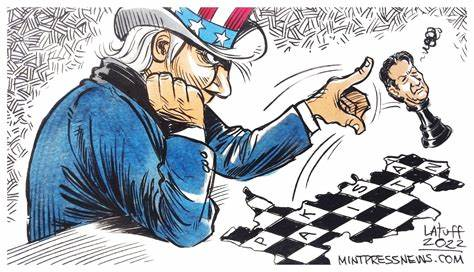
A vassal state is defined as ‘a state with varying degrees of independence in its internal affairs but dominated by another state in its foreign affairs and potentially wholly subject to the dominating state’. Is this what Western allies (Europe, especially the EU, Australia, Canada, and New Zealand) have become vis-à-vis the United States, especially under the Trump administration? This appears to be the case following the bombing of Iran’s nuclear facilities by the United States in support of Israel’s ongoing war on Iran.
The European Union’s response to the U.S. strikes on Iran Saturday has exposed more than just hypocrisy — it has revealed a vassalization so profound that the European capitals now willingly undermine both international law and their own strategic interests.
Mamedov goes on to say that…
Europe’s leaders …betray international law not for tangible gains, but out of reflexive obedience …
This notion of ‘reflexive obedience’ is manifested in the following statement by the so-called E3 (France, Germany, and the UK) after the US bombing of Iran’s nuclear facilities.
We have discussed the latest developments in the Middle East earlier today.
We reiterate our commitment to peace and stability for all countries in the region. We affirm our support for the security of Israel.
We have consistently been clear that Iran can never have a nuclear weapon and can no longer pose a threat to regional security.
Earlier today, the United States has conducted targeted military strikes against nuclear facilities in Fordo, Natanz and Isfahan. Our aim continues to be to prevent Iran from acquiring a nuclear weapon.
We call upon Iran to engage in negotiations leading to an agreement that addresses all concerns associated with its nuclear program. We stand ready to contribute to that goal in coordination with all parties.
We urge Iran not to take any further action that could destabilize the region.
We will continue our joint diplomatic efforts to defuse tensions and ensure the conflict does not intensify and spread further.
As if to show that Australia must not be left behind in the demonstration of ‘reflexive obedience’ to the US, the Australian Prime Minister (representing the centre-left Labour Party) decided to join the EU chorus. As Reuters reports:
Australia’s Prime Minister Anthony Albanese said on Monday that Canberra supported the United States strike on Iran and called for de-escalation and a return to diplomacy.
The world has long agreed that Iran cannot be allowed to get a nuclear weapon, and we support action to prevent that,” Albanese told reporters in Canberra on Monday.
Prime Minister Mark Carney says U.S. military attacks on Iranian nuclear sites were designed to alleviate the threat of the country’s nuclear program, and he reiterated that Iran can never be allowed to develop a nuclear weapon.
In the case of New Zealand, the Opposition (Labour and Green) has called ‘…on the Government to denounce the US attacks on Iranian nuclear sites as a breach of international law’. In response, the government observed through the Foreign Minister Winston Peters that New Zealand:
“consistently opposed Iran’s nuclear programme” and the country couldn’t be allowed to develop nuclear weapons.
“In that context, we note the United States’ decision to undertake targeted attacks aimed at degrading Iran’s nuclear capabilities,” the statement read.
“We also acknowledge the US statement to the UN Security Council that it was acting in collective self-defence consistent with the UN Charter.”
At least there is a reference to the UN Charter, albeit this is the self-serving position of the United States and its interpretation of the UN Charter.
These examples from the recent past show that the Western allies did not always show unconditional support to the USA when it unilaterally undertook major military actions overseas.
Why this has changed remains a topic for further investigation, although some analysts have suggested that the Ukraine war accelerated the process of vassalization of Europe. Meanwhile, the EU and its fellow travellers have not gained any respect or reciprocity from Trump. He considers himself to be the most powerful man in the world, running the most powerful country in the world, and is not beholden to anybody, even if they are credentialled members of the white man’s club.
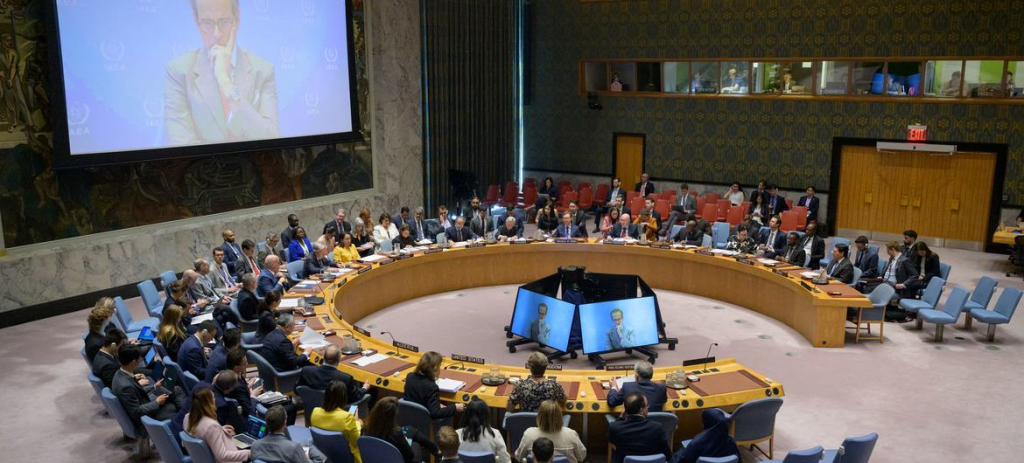
At the same time, the Western allies of the USA are ceding their moral standing to the Global South, led by China and Russia. For example, in the recent deliberations at the United Nations Security Council (UNSC) following the bombing of Iran’s nuclear facilities by the US, the representative from the Russian Federation noted that the ’..United States leadership “actually flaunted” and demonstrated “wholesale disregard” for the norms of international law and the UN Charter’. There is a draft resolution co-authored by China, Russia, and Pakistan that condemns the US attack on Iran’s nuclear facilities and calls for an unconditional ceasefire of the current Israel-Iraq war. This draft resolution appears to have been overtaken by the latest statement by Trump that Israel and Iran have now reached a ceasefire agreement. It remains to be seen whether it is another example of Trumpian self-glorification or an enduring agreement.
“The most striking feature of the post-Cold War world is its unipolarity. No doubt, multipolarity will come in time. Perhaps another generation or so, there will be great powers coequal with the United States, and the world will, in structure, resemble the pre-World War I era. But we are not there yet, nor will we be for decades. Now is the unipolar moment….
a single pole of world power that consists of the United States at the apex of the industrial West. Perhaps it is more accurate to say the United States and behind it the West, because where the United States does not tread, the alliance does not follow. “
The predictions of Krauthammer turned out to be true in two respects. First, ‘multipolarity’ in some form has arrived within decades – China, Russia, and the global South in general have their distinctive views and voices clearly articulated in international forums. Second, it is still the case that the so-called ‘industrial West’ follows the United States and dare not tread where the United States will not go. This has happened even though Europe, as the indispensable part of the ‘industrial West’, has been publicly rebuked and humiliated by the Trump administration for depending on the USA for its collective security.
The slavish allegiance of the West to the United States became embarrassingly evident when Israel pre-emptively attacked Iran on June 13. Did the avatars of the ‘rules-based’ condemn Israel and uphold the sanctity of such rules? No! Instead, the G7 offered a moronic proclamation. This statement reflects a predominantly white man’s club, with a history of engaging in genocide of indigenous populations, while, ala Krauthammer, ensuring that it stays closely behind the United States. Collective obedience represents the norm rather than the exception. One cannot upset Israel even with faint criticism because the United States will be upset. As a Guardian columnist observes with considerable dismay: “G7 leaders are paralysed by their fear of upsetting Donald Trump”.
“”The Magnificent Seven.”
June 16, 2025
Kananaskis, Alberta
We, the leaders of the G7, reiterate our commitment to peace and stability in the Middle East.
In this context, we affirm that Israel has a right to defend itself. We reiterate our support for the security of Israel.
We also affirm the importance of the protection of civilians.
Iran is the principal source of regional instability and terror.
We have been consistently clear that Iran can never have a nuclear weapon.
We urge that the resolution of the Iranian crisis leads to a broader de-escalation of hostilities in the Middle East, including a ceasefire in Gaza.
We will remain vigilant to the implications for international energy markets and stand ready to coordinate, including with like-minded partners, to safeguard market stability.”
Hmm…Only Israel has the right to defend itself; Iran does not. Indeed, no country has the right to defend itself other than Israel. Such is the perverse logic of this thesis.
“The member states of the Shanghai Cooperation Organization (SCO) express serious concern over the escalating tensions in the Middle East and strongly condemn the military strikes carried out by Israel on the territory of the Islamic Republic of Iran on June 13, 2025.
Such aggressive actions against civilian targets, including energy and transport infrastructure, which have resulted in civilian casualties, are a gross violation of international law and the United Nations Charter. They constitute an infringement on Iran’s sovereignty, cause damage to regional and international security, and pose serious risks to global peace and stability.
The SCO member states firmly advocate for the resolution of the situation surrounding Iran’s nuclear program exclusively through peaceful, political, and diplomatic means.
The SCO member states extend their sincere condolences to the people and government of the Islamic Republic of Iran.
The SCO member states, strictly adhering to the principles and norms of the UN Charter and the SCO Charter, consider any unlawful actions directed against SCO member states unacceptable and reaffirm their unwavering commitment to strengthening international peace and security.”
Reinforcing the SCO collective statement is the proclamation by 21 Arab and Islamic states on June 16, issued in Qatar. Note that some of them (Bahrain and UAE) have entered into so-called ‘Normalization Accords’ with Israel.
Doha – June 16, 2025
“In light of the rapidly evolving regional developments and the unprecedented escalation of tensions in the Middle East, particularly owing to the ongoing military aggression of Israel against the Islamic Republic of Iran, the Foreign Ministers of the State of Qatar, People’s Democratic Republic of Algeria, the Kingdom of Bahrain, Brunei Darussalam, the Republic of Chad, the Union of the Comoros, the Republic of Djibouti, the Arab Republic of Egypt, the Republic of Iraq, the Hashemite Kingdom of Jordan, the State of Kuwait, the State of Libya, the Islamic Republic of Mauritania, the Islamic Republic of Pakistan, the Kingdom of Saudi Arabia, the Federal Republic of Somalia, the Republic of the Sudan, the Republic of Türkiye, the Sultanate of Oman, and the United Arab Emirates hereby affirm the following:
• The categorical rejection and condemnation of Israel’s recent attacks on the Islamic Republic of Iran since the 13th of June 2025, and any actions that contravene international law and the purposes and principles of the Charter of the United Nations, while emphasizing the necessity of respecting the sovereignty and territorial integrity of states, adhering to the principles of good neighbourliness, and the peaceful settlement of disputes.
• The imperative need to halt Israeli hostilities against Iran, which come during a time of increasing tension in the Middle East, and to work towards de-escalation, to achieve a comprehensive ceasefire and restoration of calm, while expressing great concern regarding this dangerous escalation, which threatens to have serious consequences on the peace and stability of the entire region.
• The urgent necessity of establishing a Middle East Zone Free of Nuclear Weapons and Other Weapons of Mass Destruction, which shall apply to all States in the region without exception in line with relevant international resolutions, as well as the urgent need for all countries of the Middle East to join the Treaty on the Non-Proliferation of Nuclear Weapons (NPT).
• The paramount importance of refraining from targeting nuclear facilities that are under International Atomic Energy Agency (IAEA) safeguards, in accordance with relevant IAEA resolutions and United Nations Security Council decisions, as such acts constitute a violation of international law and international humanitarian law, including the 1949 Geneva Conventions.
• The urgency of a swift return to the path of negotiations as the only viable means to reach a sustainable agreement regarding the Iranian nuclear program.
• The importance of safeguarding the freedom of navigation in international waterways per the relevant rules of international law, and refraining from undermining maritime security.
• That diplomacy, dialogue, and adherence to the principles of good neighbourliness, in accordance with international law and the UN Charter, remain the only viable path to resolving crises in the region, and that military means cannot bring about a lasting resolution to the ongoing crisis.”
Of course, these statements, however noble, will not safeguard Iran’s security against Israeli aggression. None of the countries, including China and Russia, have, so far, offered material and military support to Iran. It is fighting a nuclear state on its own, and that too a state that is being unconditionally backed by the United States. Nevertheless, the competing statements from the G7, SCO, and the Arab and Islamic countries reveal a world that has drifted apart and is moving toward a more multipolar structure. The G7 can no longer rely on the unipolar moment. No amount of duplicitous manipulation of the notion of ‘rules-based’ international order by the G7 and its cheerleaders will be able to repair its tarnished moral standing. Ironically, countries that are dismissed by the West as authoritarian and autocratic have taken on the responsibility of defending a rules-based global order at the core of which lies UN-led international law.
It is February 2007. Only a few months ago, in December 2006, Muhammad Yunus earned the unique distinction of being the first ever Bangladeshi to win the Nobel Peace Prize for his pioneering work on micro-credit to the poor as a primary vehicle for lifting millions out of poverty. The institution that he led – Grameen Bank – shared the Nobel Prize.
Fresh from his global triumph, Yunus set his sights on the Bangladesh political landscape. Much to the surprise of mainstream politicians and the general populace at large, Yunus publicly launched a new political party Nagorik Shakti (Citizen’s Force) on 18 February 2007, which, he proclaimed, would contest in 300 constituencies whenever an election was announced. Thus, Yunus, ‘the banker to the poor’ emerged as a politician who embraced secularism and progressive, pro-poor politics and sought to lead the country into a new direction. Bangladesh, he felt, was in the grip of capricious, highly partisan, and short-sighted career politicians who were represented by the two biggest parties in the country: Bangladesh National Party (BNP) and Awami League (AL). Yunus declared:
“There is no way I can stay away from politics any longer. I am determined…and it does not matter who says what about me,”
Unfortunately, the determination and enthusiasm associated with a new political party did not last long. Yunus withdrew from this new venture because it did not garner enough support. Nagorik Shakti was abruptly disbanded on 3 March 2007, that is, roughly two weeks after it was created. He ruefully acknowledged:
“I have decided to back out from my efforts for forming a political party, bowing to the practical aspects of the situation.”
Yunus, the failed politician of 2007, did not anticipate that further trouble was brewing that would affect his global image. Unknown to him, Tom Heinemann, an award-winning Danish investigative journalist, started his intrepid field work on microcredit schemes in 2007 across three countries, Bangladesh, India and Mexico. This laid the foundation for an explosive 2010 documentary in which Heinemann argued that micro-credit, far from being an instrument for lifting people out of poverty, mired the poor and vulnerable in unsustainable ‘micro debt’. A new documentary by DW (2025) substantiates the findings of Heinemann. Subsequent professional evaluations have found that the impact of micro-credit schemes on poverty ranged from ‘zero’ (Roodman, 2012) to ‘weak’ (Churchill, 2020).
Tom Heinemann
Heinmann also made the sensational claim that Yunus engaged in financial malfeasance. This allegation was not proven in an investigation by the Norwegian government which exonerated him from any financial and unethical wrongdoing.
Unfortunately, the Heinemann documentary added grist to the mill of then Hasina regime that was bent on a sustained campaign of persecution against Yunus. He lost his custodianship of Grameen Bank and became embroiled in all kinds of legal cases. Was Yunus being punished by a ruthless government for daring to challenge the political status quo as he briefly did in 2007? Probably.
Yunus managed to activate his formidable PR and political skills to portray himself as a noble victim of an authoritarian government and elicit both global and national sympathy for his predicament. At that point, one doubts whether he even imagined that he would be able to re-emerge as a politician and be at the helm of national affairs. This is what happened in August 2024. The long reign of the AL led by Hasina came to an abrupt and ignoble end as self-appointed student leaders, supported by the masses, unleashed a bloody and violent uprising and forced Hasina to seek refuge in neighbouring India.
After the failure of 2007, Yunus made a triumphant return to national politics, while his arch-nemesis Hasina languished in India. Under the recommendation of the student leaders, Yunus was appointed Chief Adviser to an Interim Government supported by an Advisory Council.
Has Yunus learnt the lessons of his 2007 short-lived experiment to engage in politics? In some respects, yes. There is indeed a new political party called Jatiya Nagorik Party (National Citizens Party -NCP). The similarity of this label to Nagorik Shakti can be readily detected. The key difference is that it is being run by student leaders of the anti-Hasina movement. So, in formal terms, there is a discreet distance between NCP and Yunus, but there is a widely understood notion that the NCP has the blessings of the interim government. Yunus appears to have the best of both worlds. He will not be held responsible if NCP fails to sustain itself electorally. If NCP emerges as a major electoral force, then Yunus has a lot to gain. He will indeed reign supreme and succeed in his long-standing quest to break the political status quo in Bangladesh.
Yet, the future for Yunus is not so clear. In seeking political redemption and retribution, the noble laureate has experienced several setbacks – such as the rise of Islamic radicalism, diluting the integrity of the judicial process, failure to improve the law and order situation, being evasive about holding elections, unable to engage in policies that can revive economic growth, reduce poverty and create jobs. While Yunus has actively courted one influential constituency —the self-appointed student leaders and Islamist parties —he has found himself at odds with the BNP. Bangladesh’s largest political party has insisted that an unelected, interim government must be quickly replaced by an elected parliamentary government by December of this year. The powerful Bangladesh Army has lent support to the BNP’s stand.
How does Yunus, the politician, respond under such challenging circumstances? Even a global icon like Yunus has limits to his authority and influence if he lacks electoral legitimacy. A sustainable pathway to power does not lie in prolonging the life of an unelected interim government or in offering preferential treatment to an upstart political party like NCP. Perhaps he should pay heed to the sagacious advice of one of his well-wishers:
” Yunus is 84 years old. His best bet to protect his legacy is to avail a safe exit by holding a free and fair election and facilitating a peaceful transition to a democratically elected political government, which would have more legitimacy than his interim administration and be in a better position to move the country forward.”
Aunul Islam, read for his PhD at Imperial College, London. He graduated from The University of Manchester. He is a Quality Assurance Specialist in Higher Education and a Technology Consultant. He is an ex-civil servant of the UK government. A keen gardener, he finds solace through nature in this dysfunctional world order.
Figure 1 Legendary Indian actor Dilip Kumar as Sagina Mahato
Figure 2: Prof Yunus, who leads the Interim government of Bangladesh
The political drama continues to unfold after the fall of Sheikh Hasina, Prime Minister of Bangladesh, in August 2024. It has been more than seven months since that epochal event. I have tried to understand and fathom the various twists and turns that are taking place.
At the helm of the interim government is Prof. Yunus, a Nobel Peace Prize winner (Unlike prizes in science, literature, etc, which are very much technically vetted, the Peace prize has its own controversy as it is influenced by political manoeuvring, particularly by the USA). According to Yunus, the students put him there to lead the nation and were supported by various advisers with different portfolios. Having seen much news, podcasts, political analyses, and – at the core- several interviews given by Prof. Yunus himself, my mind cast back to a decades-old Bengali Film, based on a true story, entitled “Sagina Mahato” (1970). At the core of the narrative lies the story of how a factory worker, from North Bengal, Sagina Mahato, is manipulated by powerful, behind-the-scenes actors (represented by Amal) into becoming a labour leader and ends up as an apparent traitor to the cause of his comrades.
At this juncture, my analysis of the present political scenario in Bangladesh will be based on the two characters, Sagina Mahato and Prof. Yunus. One can understand how Sagina Mahato, a labour worker, who had no education and political knowledge and acumen, can easily be led to his personal and political doom. I fail to understand why Prof. Yunus should be in such a position, which, in my opinion, is spiralling into an abyss.
Several issues stand out. First, the rise of Islamic radicalism in Bangladesh is being tolerated by the Yunus regime, as the New York Times claims in a recent piece. Second, he continues to blame the ousted Hasina regime for the fragile law and order situation in the country, but how long can the Hasina regime be the scapegoat for the ills of today? Third, he has been evasive about holding elections, other than suggesting that they will be held sometime between December 2025 and June 2026. This ambivalent approach has perturbed even his well-wishers, such as Mahfuz Anam, editor and publisher of the prominent Bangladesh newspaper The Daily Star. Is the ambivalence merely a way for Prof. Yunus to cling to power by stealth? As Anam says:
“As his lifelong admirer and sincere well-wisher, I think that an undue extension of his tenure would mire Prof Yunus into unnecessary and, for him, undignified controversies”.
Sagina Mahato’s failure had led to affecting the lives of a few thousand workers, whereas the missteps by Prof. Yunus will affect a whole nation of approximately 18 million people. It is unfathomable why he should do so. I leave it to experts in social theories of human character and leadership to fully understand him.
I can only leave a final thought by sharing two quotes:
“If you don’t know how to lead, why put us in this death trap”? – An unknown soldier.
“When a clown moves into a palace, he doesn’t become a king. The palace becomes a circus.” — Turkish proverb.






 Reflections on development and governance