The bombing of Iran’s nuclear facilities by the USA and the ‘vassalization’ of its Western allies

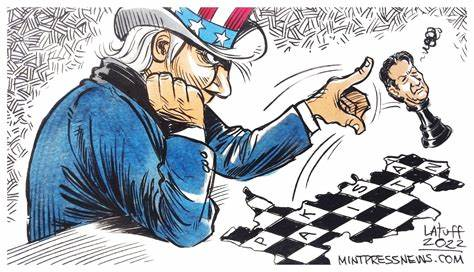
A vassal state is defined as ‘a state with varying degrees of independence in its internal affairs but dominated by another state in its foreign affairs and potentially wholly subject to the dominating state’. Is this what Western allies (Europe, especially the EU, Australia, Canada, and New Zealand) have become vis-à-vis the United States, especially under the Trump administration? This appears to be the case following the bombing of Iran’s nuclear facilities by the United States in support of Israel’s ongoing war on Iran.

Eldar Mamedov, from Quincy Institute, laments:

The European Union’s response to the U.S. strikes on Iran Saturday has exposed more than just hypocrisy — it has revealed a vassalization so profound that the European capitals now willingly undermine both international law and their own strategic interests.

Mamedov goes on to say that…

Europe’s leaders …betray international law not for tangible gains, but out of reflexive obedience …

This notion of ‘reflexive obedience’ is manifested in the following statement by the so-called E3 (France, Germany, and the UK) after the US bombing of Iran’s nuclear facilities.

We have discussed the latest developments in the Middle East earlier today.

We reiterate our commitment to peace and stability for all countries in the region. We affirm our support for the security of Israel.

We have consistently been clear that Iran can never have a nuclear weapon and can no longer pose a threat to regional security. 

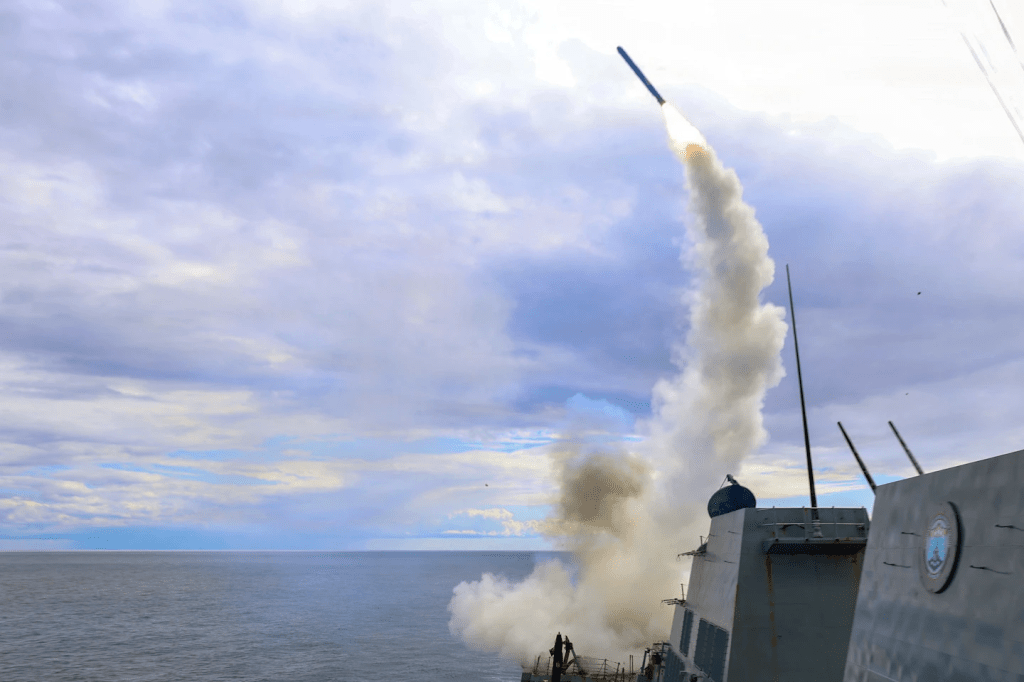
Earlier today, the United States has conducted targeted military strikes against nuclear facilities in Fordo, Natanz and Isfahan. Our aim continues to be to prevent Iran from acquiring a nuclear weapon.

We call upon Iran to engage in negotiations leading to an agreement that addresses all concerns associated with its nuclear program. We stand ready to contribute to that goal in coordination with all parties.

We urge Iran not to take any further action that could destabilize the region.

We will continue our joint diplomatic efforts to defuse tensions and ensure the conflict does not intensify and spread further.

As if to show that Australia must not be left behind in the demonstration of ‘reflexive obedience’ to the US, the Australian Prime Minister (representing the centre-left Labour Party) decided to join the EU chorus. As Reuters reports:

Australia’s Prime Minister Anthony Albanese said on Monday that Canberra supported the United States strike on Iran and called for de-escalation and a return to diplomacy.

The world has long agreed that Iran cannot be allowed to get a nuclear weapon, and we support action to prevent that,” Albanese told reporters in Canberra on Monday.

What about Canada? More of the same! CBC reports

Prime Minister Mark Carney says U.S. military attacks on Iranian nuclear sites were designed to alleviate the threat of the country’s nuclear program, and he reiterated that Iran can never be allowed to develop a nuclear weapon.

In the case of New Zealand, the Opposition (Labour and Green) has called ‘…on the Government to denounce the US attacks on Iranian nuclear sites as a breach of international law’. In response, the government observed through the Foreign Minister Winston Peters that New Zealand:

“consistently opposed Iran’s nuclear programme” and the country couldn’t be allowed to develop nuclear weapons.

“In that context, we note the United States’ decision to undertake targeted attacks aimed at degrading Iran’s nuclear capabilities,” the statement read.

“We also acknowledge the US statement to the UN Security Council that it was acting in collective self-defence consistent with the UN Charter.”

At least there is a reference to the UN Charter, albeit this is the self-serving position of the United States and its interpretation of the UN Charter.

One wistfully recalls a time when both France and Germany got together to oppose the US-led invasion of Iraq in 2003. In Canada, former Prime Minister Jean Chrétien ”stated in the House of Commons that Canada would not join the US-led war in Iraq after President George W. Bush gave the UN Security Council (UNSC) a 24-hour ultimatum to approve the resolution to invade Iraq.”

These examples from the recent past show that the Western allies did not always show unconditional support to the USA when it unilaterally undertook major military actions overseas.

Why this has changed remains a topic for further investigation, although some analysts have suggested that the Ukraine war accelerated the process of vassalization of Europe. Meanwhile, the EU and its fellow travellers have not gained any respect or reciprocity from Trump. He considers himself to be the most powerful man in the world, running the most powerful country in the world, and is not beholden to anybody, even if they are credentialled members of the white man’s club.

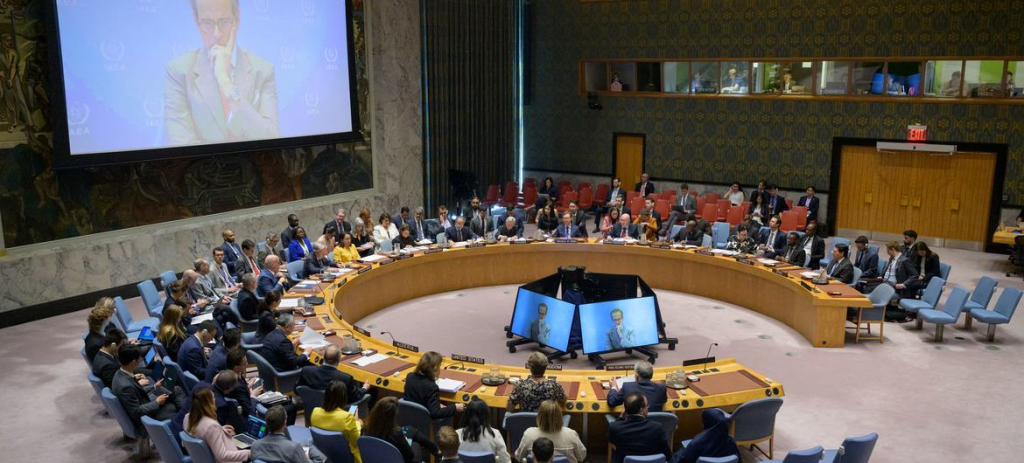
At the same time, the Western allies of the USA are ceding their moral standing to the Global South, led by China and Russia. For example, in the recent deliberations at the United Nations Security Council (UNSC) following the bombing of Iran’s nuclear facilities by the US, the representative from the Russian Federation noted that the ’..United States leadership “actually flaunted” and demonstrated “wholesale disregard” for the norms of international law and the UN Charter’. There is a draft resolution co-authored by China, Russia, and Pakistan that condemns the US attack on Iran’s nuclear facilities and calls for an unconditional ceasefire of the current Israel-Iraq war. This draft resolution appears to have been overtaken by the latest statement by Trump that Israel and Iran have now reached a ceasefire agreement. It remains to be seen whether it is another example of Trumpian self-glorification or an enduring agreement.

Once again, Trump has blindsided his Western lackeys. They are hapless onlookers as Trump makes unilateral decisions on the global stage, whether it is bombing a sovereign nation or announcing a ceasefire. The Western allies of the US can only react and endorse meekly whatever decision Trump takes. Pity!

UNSC meets to discuss Israel-Iran war, but Trump has his way>>>

A world apart: Israel’s attack on Iran and the West vs the Rest

In 1990, the late Charles Krauthammer observed in a much-noted article in Foreign Affairs:

“The most striking feature of the post-Cold War world is its unipolarity. No doubt, multipolarity will come in time. Perhaps another generation or so, there will be great powers coequal with the United States, and the world will, in structure, resemble the pre-World War I era. But we are not there yet, nor will we be for decades. Now is the unipolar moment….

a single pole of world power that consists of the United States at the apex of the industrial West. Perhaps it is more accurate to say the United States and behind it the West, because where the United States does not tread, the alliance does not follow. “

The predictions of Krauthammer turned out to be true in two respects. First, ‘multipolarity’ in some form has arrived within decades – China, Russia, and the global South in general have their distinctive views and voices clearly articulated in international forums.  Second, it is still the case that the so-called ‘industrial West’ follows the United States and dare not tread where the United States will not go. This has happened even though Europe, as the indispensable part of the ‘industrial West’, has been publicly rebuked and humiliated by the Trump administration for depending on the USA for its collective security.

The slavish allegiance of the West to the United States became embarrassingly evident when Israel pre-emptively attacked Iran on June 13. Did the avatars of the ‘rules-based’ condemn Israel and uphold the sanctity of such rules? No! Instead, the G7 offered a moronic proclamation. This statement reflects a predominantly white man’s club, with a history of engaging in genocide of indigenous populations, while, ala Krauthammer, ensuring that it stays closely behind the United States. Collective obedience represents the norm rather than the exception. One cannot upset Israel even with faint criticism because the United States will be upset. As a Guardian columnist observes with considerable dismay: “G7 leaders are paralysed by their fear of upsetting Donald Trump”.

“”The Magnificent Seven.”

June 16, 2025

Kananaskis, Alberta

We, the leaders of the G7, reiterate our commitment to peace and stability in the Middle East.

In this context, we affirm that Israel has a right to defend itself. We reiterate our support for the security of Israel.

We also affirm the importance of the protection of civilians.

Iran is the principal source of regional instability and terror.

We have been consistently clear that Iran can never have a nuclear weapon.

We urge that the resolution of the Iranian crisis leads to a broader de-escalation of hostilities in the Middle East, including a ceasefire in Gaza.

We will remain vigilant to the implications for international energy markets and stand ready to coordinate, including with like-minded partners, to safeguard market stability.”

Hmm…Only Israel has the right to defend itself; Iran does not. Indeed, no country has the right to defend itself other than Israel. Such is the perverse logic of this thesis.

The rest of the world can see that the ‘emperor has no clothes’. Hence, 10 member states of the Shanghai Cooperation Organization, led by China, offered the following statement on June 14:

“The member states of the Shanghai Cooperation Organization (SCO) express serious concern over the escalating tensions in the Middle East and strongly condemn the military strikes carried out by Israel on the territory of the Islamic Republic of Iran on June 13, 2025.

Such aggressive actions against civilian targets, including energy and transport infrastructure, which have resulted in civilian casualties, are a gross violation of international law and the United Nations Charter. They constitute an infringement on Iran’s sovereignty, cause damage to regional and international security, and pose serious risks to global peace and stability.

The SCO member states firmly advocate for the resolution of the situation surrounding Iran’s nuclear program exclusively through peaceful, political, and diplomatic means.

The SCO member states extend their sincere condolences to the people and government of the Islamic Republic of Iran.

The SCO member states, strictly adhering to the principles and norms of the UN Charter and the SCO Charter, consider any unlawful actions directed against SCO member states unacceptable and reaffirm their unwavering commitment to strengthening international peace and security.”

Reinforcing the SCO collective statement is the proclamation by 21 Arab and Islamic states on June 16, issued in Qatar. Note that some of them (Bahrain and UAE) have entered into so-called ‘Normalization Accords’ with Israel.

Doha – June 16, 2025

“In light of the rapidly evolving regional developments and the unprecedented escalation of tensions in the Middle East, particularly owing to the ongoing military aggression of Israel against the Islamic Republic of Iran, the Foreign Ministers of the State of Qatar, People’s Democratic Republic of Algeria, the Kingdom of Bahrain, Brunei Darussalam, the Republic of Chad, the Union of the Comoros, the Republic of Djibouti, the Arab Republic of Egypt, the Republic of Iraq, the Hashemite Kingdom of Jordan, the State of Kuwait, the State of Libya, the Islamic Republic of Mauritania, the Islamic Republic of Pakistan, the Kingdom of Saudi Arabia, the Federal Republic of Somalia, the Republic of the Sudan, the Republic of Türkiye, the Sultanate of Oman, and the United Arab Emirates hereby affirm the following:

•⁠  ⁠The categorical rejection and condemnation of Israel’s recent attacks on the Islamic Republic of Iran since the 13th of June 2025, and any actions that contravene international law and the purposes and principles of the Charter of the United Nations, while emphasizing the necessity of respecting the sovereignty and territorial integrity of states, adhering to the principles of good neighbourliness, and the peaceful settlement of disputes.

•⁠  ⁠The imperative need to halt Israeli hostilities against Iran, which come during a time of increasing tension in the Middle East, and to work towards de-escalation, to achieve a comprehensive ceasefire and restoration of calm, while expressing great concern regarding this dangerous escalation, which threatens to have serious consequences on the peace and stability of the entire region.

•⁠  ⁠The urgent necessity of establishing a Middle East Zone Free of Nuclear Weapons and Other Weapons of Mass Destruction, which shall apply to all States in the region without exception in line with relevant international resolutions, as well as the urgent need for all countries of the Middle East to join the Treaty on the Non-Proliferation of Nuclear Weapons (NPT).

•⁠  ⁠The paramount importance of refraining from targeting nuclear facilities that are under International Atomic Energy Agency (IAEA) safeguards, in accordance with relevant IAEA resolutions and United Nations Security Council decisions, as such acts constitute a violation of international law and international humanitarian law, including the 1949 Geneva Conventions.

•⁠  ⁠The urgency of a swift return to the path of negotiations as the only viable means to reach a sustainable agreement regarding the Iranian nuclear program.

•⁠  ⁠The importance of safeguarding the freedom of navigation in international waterways per the relevant rules of international law, and refraining from undermining maritime security.

•⁠  ⁠That diplomacy, dialogue, and adherence to the principles of good neighbourliness, in accordance with international law and the UN Charter, remain the only viable path to resolving crises in the region, and that military means cannot bring about a lasting resolution to the ongoing crisis.”

Of course, these statements, however noble, will not safeguard Iran’s security against Israeli aggression. None of the countries, including China and Russia, have, so far, offered material and military support to Iran. It is fighting a nuclear state on its own, and that too a state that is being unconditionally backed by the United States. Nevertheless, the competing statements from the G7, SCO, and the Arab and Islamic countries reveal a world that has drifted apart and is moving toward a more multipolar structure. The G7 can no longer rely on the unipolar moment. No amount of duplicitous manipulation of the notion of ‘rules-based’ international order by the G7 and its cheerleaders will be able to repair its tarnished moral standing. Ironically, countries that are dismissed by the West as authoritarian and autocratic have taken on the responsibility of defending a rules-based global order at the core of which lies UN-led international law.

Israel’s demographic future and its socioeconomic implications

The ultra-orthodox Jews (or Haredim) now account for 13.5 percent of the Israeli population, but in about 40 years, this is projected to increase to 31.3 percent if the exceptionally high fertility rates of Haredi females are maintained. Haredi Jews hardly mix with other Jews and have views and values that are incompatible with the secular and Zionist character of Israel. More importantly, Haredi men have rather low employment rates and the highest poverty rates. Most children of the Haredi community go to specially designated schools that shun the core curriculum of English, Maths and Science. Because of their growing size, Haredi parties exercise considerable political power which is likely to grow over time. This enables them to sustain the required budgetary support from the government that allows Haredi lifestyles to be sustained. Under a business-as-usual scenario, Israel could become a poorer, less productive economy, given that a large part of Israeli society will consist of Haredi men and women that will impose a major fiscal burden on the state. The political leadership might not be able to break out of the status quo if it remains addicted to ‘forever wars’ as a way of subverting the aspirations of Palestinian statehood and thus neglect the challenges posed by Israel’s demographic transformation.

Interested in reading more? Follow the link below