Offers succinct commentary on topical issues that cut across both rich and poor countries. Entails critical insights on poverty, inequality, health, macro-policies and many more
Viral Empire: How Microbes Reflect Human Power Structures
By Aunul Islam, PhD (Imperial College, UK)
Modern power no longer operates primarily through borders or armies but through networks—supply chains, information flows, technology, and interdependence. In this sense, contemporary geopolitics resembles microbial systems more than traditional empires.
Microbes exert influence through connectivity, adaptation, and asymmetry. Small organisms can destabilise large systems by exploiting vulnerabilities, just as minor interventions can trigger outsized effects in a networked world. Power depends less on scale than on speed, positioning, and resilience.
Like microbes, political systems evolve under pressure. Expansion produces resistance, cooperation strengthens survival, and rigid structures fail in volatile environments. The greatest risk is not defeat by rivals but internal systemic collapse.
Seen this way, global power functions as a living ecosystem—adaptive, fragile, and continuously contested rather than permanently controlled.
In the above narration, the scientific expressions like mutation, virulence in the microbes behaviour have been translated in the business and strategic literature to relate them to humans. But this literature lacks sufficient emphasis on the destruction through wars and conflicts by humans on core aspects of their own life. This entails destruction of properties and other supporting elements such as hospitals, energy production etc.
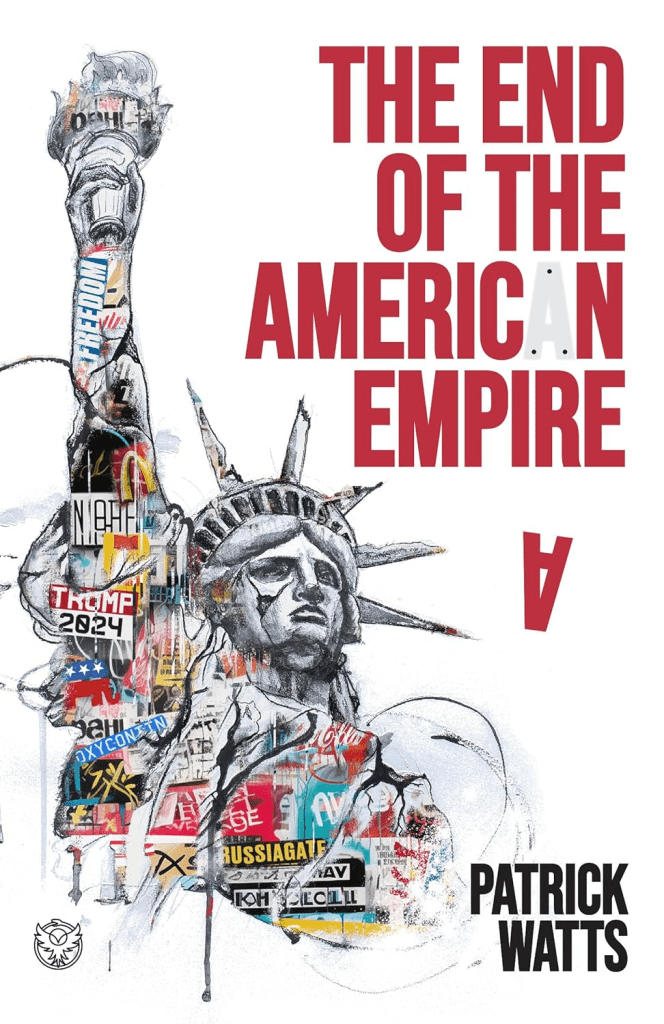
At this juncture, the anti-thesis to above narratives is that human empire or a Supreme Empire do not adhere to the simple modalities in present day geopolitics. The present empire dictated by a lone country (USA) along with its lackeys is no longer a traditional empire as depicted previously. The viral empire like that of the bubonic plague or even the Covid-19 virus are now long forgotten past. The present Super Empire is best described as the worst of its kind, genocidal in nature and any other terms that can be used to describe it, where new words have to be added to the dictionary.
The last hope of the present world order is that the super empire does behave like a viral empire and succumbs to its own systemic collapse. Maybe this will happen in the next few decades!
There are several reasons why one can be optimistic about the survival of the current regime in Iran following the illegal and unprovoked war on the nation waged by the USA and Israel. First, the regime managed to overcome its most dangerous and fragile moment, that is, immediately after the assassination by Israeli bombs of Khamenei, his family members and his entourage of senior leaders. At 86, and after having ruled Iran for 40 years with an iron fist, Khamenei decided to become a martyr. Hence, he was at his office – a publicly disclosed location – when he was killed. This was both a spiritual and strategic move. Martyrdom plays a vital role among the Shia faithful. The decision to die in this manner was strategic because it signalled to the Iranian population that a succession plan was in place in line with constitutional provisions. Iran is a constitutional republic that has endured for 50 years. It is not a lawless theocracy dependent on the whims of an aging Ayatollah.
Second, and this follows from the first, Trump and Netanyahu failed to understand the multi-layered structure of the Iranian regime. They thought with Khamenei and his senior entourage gone, the regime would collapse and the thankful Iranians would dance with joy in the streets and enthusiastically engage with a new pro-American and pro-Israeli political settlement. Both Trump and Netanyahu would declare victory and go home. This did not happen. Instead, the regime maintained its constitutional continuity. The bombing continues, hundreds have been killed so far (550 at last count). It is difficult at this stage for the average Iranian to treat the Americans and Israelis as liberators when they are being killed and maimed by made in USA bombs and missiles.
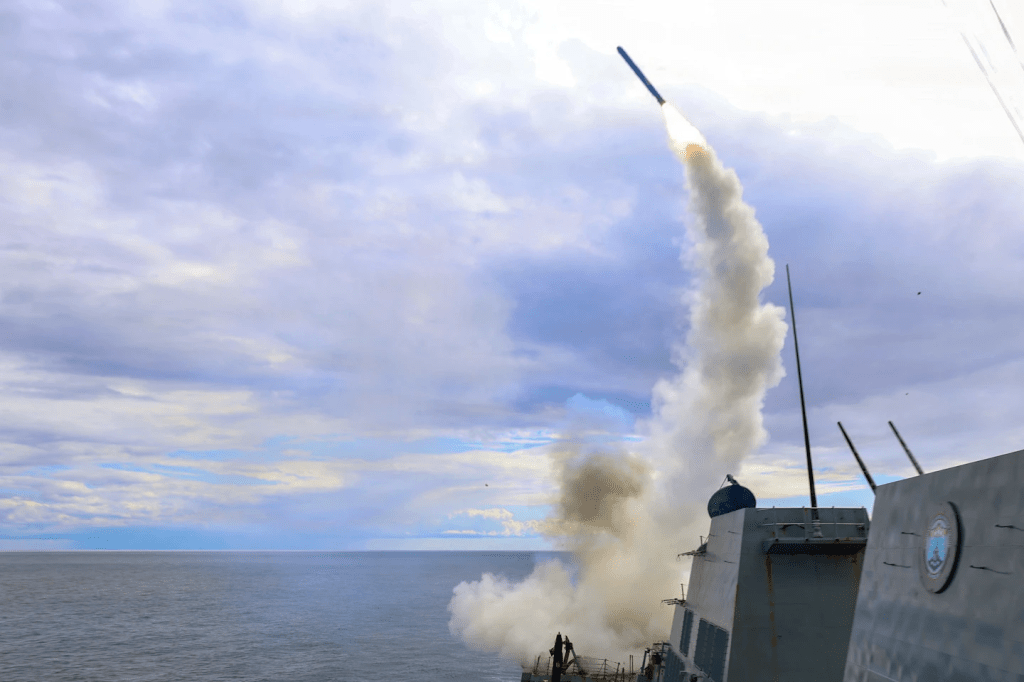
Third, Iran has shown that it can retaliate against the combined military might of USA and Israel by using a most potent weapon of modern warfare – long-range (but not intercontinental) ballistic missiles that draw on North Korean, Russian and Chinese expertise. According to some estimates, Iran possesses more than 3,000 of them. Admittedly, both USA and Israel have so-called interceptors, that is, defensive technology that can intercept incoming missiles. But, as Israel is finding to its cost, such a technology is not fool-proof. Most importantly, the very sophistication of this technology is also its Achilles Heel. It is extremely expensive to operate, stocks are limited and has high turnaround times to replenish. It has been suggested that neither the USA nor Israel has the capacity to sustain full-scale use of the interceptors beyond a few weeks before critical shortages emerge.
Fourth, Iran has fully adopted the tools of asymmetric warfare which weaker parties deploy against formidable adversaries. Unlike the last war (June 2025), when it was attacked by Israel, Iran decided from the very beginning that there are no ‘red lines.’ Hence, it is hitting the Arab allies of USA in the Gulf monarchies and causing them considerable grief and consternation. This is being done by inflicting damage on US bases hosted by the Gulf states, targeting sensitive civilian assets entailing airports, ports, luxury hotels and energy infrastructure. The result is mayhem. The famous airlines of the Middle East – Emirates, Etihad and Qatar – are all grounded. ‘Hundreds of thousands of travellers’ are caught in limbo. The carefully curated images of Bahrain, Dubai, Abu Dhabi and Doha as safe playgrounds for affluent, hedonistic hustlers have been severely damaged. Most importantly, energy prices are projected to rise sharply, partly because countries such as Qatar have temporarily stopped LNG production. Iran has also choked off traffic in the Straits of Hormuz to a trickle. This is highly significant because Hormuz hosts oil tankers that supply 20-30% of the world’s oil.
The attack on the Arab allies of USA might appear that an Iranian regime is lashing out against its neighbours in desperation, but the strategic rationale is different. By attacking the Gulf states in such a brazen way, Iran is sending a clear message: US protection of its Arab allies means extraordinarily little when push comes to shove. This is a move by the Iranians that was not part of the strategic calculus of USA and its allies.
Fourth, it is by no means clear that Trump has the appetite for a long war which is deeply unpopular among Americans (75% oppose the war on Iran, according to some polls). He has brazenly broken his election pledge that there will be no more ‘wars of choice.’ Trump’s approval rating is low. His MAGA base is becoming restless, caught in the grip of a cost-of-living crisis that is likely to worsen with the projected increase in energy prices. Mid-term elections are approaching and Trump has little to show as accomplishments other than vacuous showmanship. American military personnel are paying for Trump’s war of choice with their lives – six dead so far with many more injuries. The pain threshold for the average American is low when such needless deaths occur.
In sum, ‘victory’ for Iran means regime survival even when facing formidable foes. If Iran can pull it off, it will be seen as the mythical David prevailing over Goliath. Of course, the costs will be extremely high in terms of death and destruction and adverse economic consequences that will linger for years, but the Iranian leadership could say that it did not choose this suicidal path. It was forced to defend the nation against implacable and powerful enemies.
 Reflections on development and governance