Zohran Mamdani prevailed over Andrew Cuomo in the mayoral election of New York City (NYC) held on November 4. Cuomo, a former governor of New York state and, more importantly, a scion of the Democratic Party establishment, was easily beaten by someone who was virtually unknown a year ago. A third Republican candidate, Curtis Sliwa, became a rather distant third.

Young, energetic, and infused with a great deal of personal charm and charisma, Mamdani demonstrated an exceptionally high degree of oratorical skills. He has an uncanny ability to connect with a diverse constituency.
Mandani’s election victory is as improbable as it is memorable. He is indeed destined for the history books. At 34, he is the youngest NYC mayor in over a century and the first one since 1969 to get over a million votes. Cuomo, despite being disgraced by allegations of multiple instances of sexual misconduct, decided to run for the mayoral election as a Democratic nominee, only to find that it was the unknown Mamdani who ousted him in the primaries. Cuomo, driven by pure ambition and a sense of entitlement, decided to run as an independent only to be defeated, yet again, by a seemingly upstart politician.
Mamdani is also the first-ever Muslim mayor of the largest city in the United States. He was born in Uganda to parents with Indian heritage. His mother, Mira Nair, is a globally well-known filmmaker. His father, Mahmood Mamdani, is a distinguished political scientist and anthropologist who teaches at Columbia University in his capacity as a Professorial Chair.

Mira Nair

Mahmood Mamdani
Mamdani used his religious identity like a badge of honour that reflects both his political acumen and a deep commitment to fighting Islamophobia that has become rampant in US and Western political discourse. In doing so, Zohran Mamdani seems to have been inspired by one of his father’s provocative scholarly contributions, where the author makes a distinction between ‘bad’ Muslims and ‘good Muslims’.
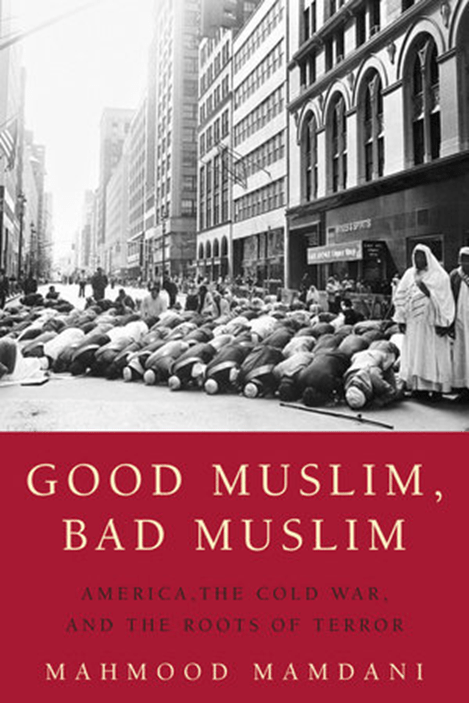
‘Bad Muslims’ are seen as inherently anti-American and antisemitic. They are both despised and feared as ‘Jihadists’ who reject Western hegemony. They are prepared to fight an interminable war, through acts of terrorism, against both Israel and its Western allies. ‘Good Muslims’, on the other hand, are supposed to be secular and westernised and fully prepared to accept Western hegemony. They lead quiescent lives as law-abiding citizens in both the Western and Muslim worlds. They seek to remain, as Zohran Mamdani put it, ‘in the shadows.’
In the official ‘war on terror’ that was launched by the Bush administration in the wake of 9/11, the underlying premise is that good Muslims need to be separated from bad Muslims through a combination of coercion and co-option. This is how anti-Americanism and antisemitism can be durably defanged. Hence, the rise of ‘Homeland Security’ (with a current budget of US$411 billion +) and a high surveillance society primarily targeting Muslims in the US-led West. Islamophobia became the norm rather than the exception.
Zohran Mamdani is certainly secular and ‘Westernised’ in the sense that he was largely educated in the United States. Still, he is prepared to step out of ‘the shadows’ by embracing the anti-establishment ethos of the ‘bad Muslim’. He openly supports the Palestinian cause and decries the genocide committed in Gaza by Israel. He uses this narrative to reinforce his ‘Democratic Socialist’ credentials where he seeks to improve the living conditions of ordinary New Yorkers through concrete measures, such as affordable rental accommodation, free public transport and universal childcare financed by modestly increased taxation of the top 1 percent of affluent New Yorkers and raising the corporate tax rate to match the rate prevailing in the neighbouring state of New Jersey.
Timorous centrist politicians in the Democratic Party must have regarded Zohran Mamdani as a misguided novice who faced certain political oblivion in a city that had the largest number of Jews outside Israel and the largest number of billionaires (more than 120) in the world in a single city. They would have chortled with derision. How could he spout anti-Israeli rhetoric, seek to tax the rich, and demonstrate his Muslim credentials?
It seems that Zohran Mamdani had the last laugh against his detractors. He read the mood of the electorate much better than his Democratic fellow travellers. More than 30 per cent of Jewish New Yorkers voted for Mamdani – no mean feat for someone painted as a Jew-hating politician. As he observed in his victory speech:
“I am Muslim. I am a democratic socialist. And most damning of all, I refuse to apologise for any of this.”
Of course, Zohran Mamdani has a long journey ahead. His powerful political opponents, including President Trump, will not quietly accept the electoral verdict. After all, multiple billionaires poured more than US$40 million into Andrew Cuomo’s campaign coffers. The pro-Israeli lobby will not wither away. Anti-Mamdani forces will be relentless in discrediting and vilifying a politician who is both a ‘socialist’ and a ‘bad Muslim’. Will they prevail? Only time will tell.

 Reflections on development and governance
Dear Prof. Yan,
I absolutely loved your article. The way you drew on Mahmood Mamdani’s brilliant distinction between the “bad Muslim” and the “good Muslim” in the eyes of the West really caught my attention. Your “spot-on” take on Zohran Mamdani stepping out of the shadows of the so-called good Muslims was simply outstanding.
I also loved the way you presented the voting statistics and other key numbers from the election results. There’s no doubt Mamdani faces huge challenges and a tough road ahead in trying to deliver on his mayoral promises. Unfortunately, as you rightly pointed out, he’s likely to face personal vendettas and deliberate efforts to bring him down.
As you said, only time will tell who will prevail.
LikeLike