K-drama – saga in the South Korean parliament

By

Aunul Islam

Aunul Islam, read for his PhD at Imperial College, London. He graduated from The University of Manchester. He is a Quality Assurance Specialist in Higher Education and a Technology Consultant. He is an ex-civil servant of the UK government. A keen gardener, he finds solace through nature in this dysfunctional world order.

The drama that took place in the recent Korean parliament on 4th of December 2024 as martial law was declared by President Yoon ended, to echo T.S. Eliot, in a whimper.

This is the way the world ends
Not with a bang but a whimper.

The so-called martial law in South Korea lasted a mere six hours. It reminds me of a K-drama, “crash landing on you.”  

This is a romantic story between two Koreas. Why trivialise a potentially grave political event by trying to interpret it through the lens of a very popular k- drama?

Sometimes dramas carry a larger message than one gives them credit. Many have analysed this event from various angles – see, for example, BBC news,4th December 2024, Laura Bicker, reporting from Seoul.

Source: BBC, President Yoon Suk Yeol faces impeachment vote after martial law backlash – BBC News

Let us go back in history. Do you remember the unification of Germany?  The two have a common factor. East Germany was a communist bloc and here, the North in case of Korea.

Was the drama (Crash Landing) fantasising on the unification of both Koreas?

West Germany gained a lot by the unification, with a dedicated and skilled workforce with a different socio-working ethos. The unification was a boon for the West as strategically it gained a large work force while at the same time neutralising the threat of Communism from the East.

Let us revisit the K-drama, “crash landing on you”, to briefly analyse the saga that unfolded in the Korean parliament. A rich woman from Gangham (which also reminds me of the very popular song Gangham style) in Seoul, whilst paragliding and by a freak accident landed in the military border town of North Korea. The drama was portrayed in a politically correct and balanced way as it appeared that the writer did not want to generally demean the North Koreans. I also feel it had the blessings of The Ministry of Unification a government body responsible for all issues on inter-Korean relations. The ministry’s existence reflects the unique reality of the Korean peninsula, which has remained divided since the end of the Korean War in 1953.

The drama showed impoverished and poor living conditions in the military border town of North Korea, but it portrayed the people as resolute and proud of their communism.

What has happened in the South Korean parliament has convinced me to look at contemporary political developments in that country through the prism of K-drama.

There are many who dream of a united Korea and of course many are against it. Recently the Korean Won has devalued, and the golden period of capitalism is perhaps no longer that bright. Against this backdrop, the present government wanted a scapegoat, and the influence of North Korea had to be blamed. Although democracy prevailed and the martial law failed to materialise, it does not necessarily augur well for the future of South Korea.

Will we see a unification of the Koreas like Germany in the future?
The governance of central banks and monetary policy committees: are they too narrowly constructed?

A modern central bank usually relies on ‘monetary policy committees’ or MPCs (albeit with different names, such as boards and councils) that play a pivotal role in the conduct of monetary policy. The collective deliberations of the MPCs are held regularly throughout the year and are geared towards recommendations (either by vote or consensus) on the setting of the policy rate.

The core principle is that the practice of monetary policy – and hence the role of the MPCs – should be free of political pressure. Central banks should be accountable but have operational independence in pursuit of their primary goal of maintaining price stability.

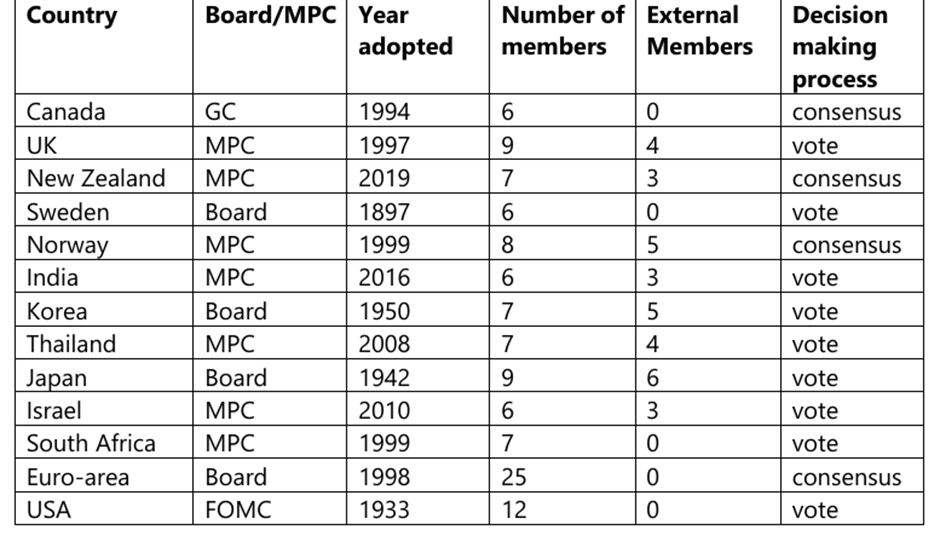
The size of the MPCs and the decision-making structure varies across countries and regions as shown below (Table 1). The MPCs are dominated by internal bank staff and economists, and, in some cases, with representatives from the corporate world. There are also cases in which there are no external members. There is no scope for representatives of workers and employers and representatives from civil society to be part of the membership of MPCs.  

Table 1: Composition of MPCs, selected central banks

Source: https://rbareview.gov.au/sites/rbareview.gov.au/files/2023-04/rbareview-paper-gai.pdf

The degree of gender parity is low in a typical MPC. India is a conspicuous example – see Exhibit 1. Would improving gender parity improve the quality of monetary policy as measured in terms of maintaining price stability? Research findings on this are ambivalent, but the aim is to use an august institution to promote gender equality which is a core element of the global development agenda.

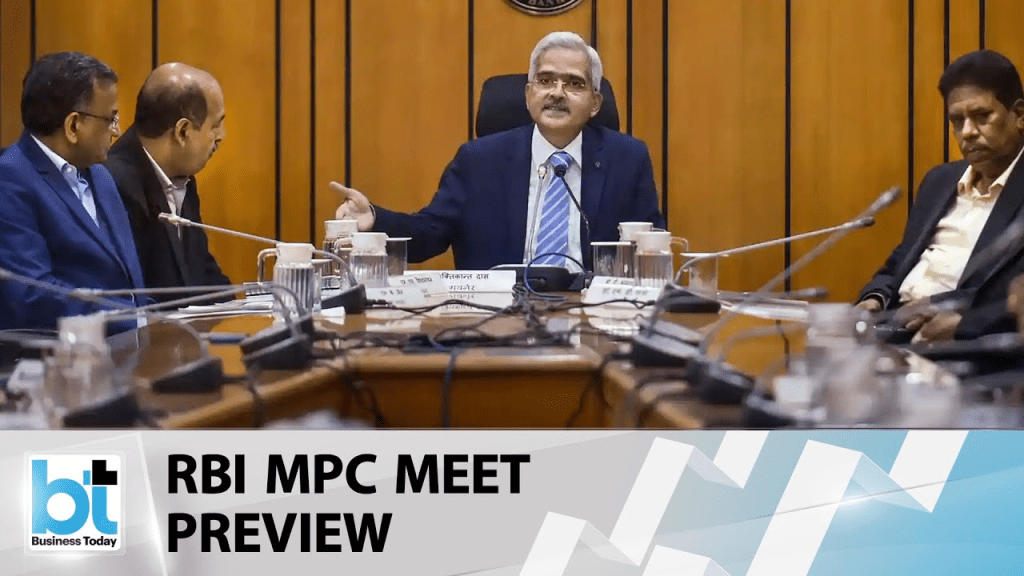
Exhibit 1: Where have all the women gone? The Governor of the Reserve Bank of India meets with members of the MPC

Despite the restrictions placed on central banks that restrain them from broad-based community-level engagement, these entities have tried to overcome such restraints by a transparent communications strategy in which deliberations of MPCs are made public. Furthermore, in recent years central banks have moved away from a preoccupation with price and financial stability. One important example of this trend is a new form of engagement via international cooperation among central banks, most notably supporting climate action as a key aspect of monetary policy. This is best illustrated by the ‘Network for Greening the Financial System’ (NGFS) which now has 134 members.

Financial inclusion is another way in which central banks are changing their engagement with workers and employers and the broader community. As is well known, the aim of financial inclusion is to incorporate the unbanked segment of the population – which can be quite large in developing countries – into the formal financial system. A 2024 meta-analytical assessment shows that ‘…financial inclusion outcomes reflect small, positive and statistically significant average effects on consumption, income, asset and other poverty-related indicators. Given this finding, it is noteworthy to point out that the ‘Alliance for Financial Inclusion’ reports that there are now 84 central banks across the world that have formally integrated financial inclusion in their mandates.

Financial inclusion creates synergies between monetary policy and poverty reduction strategies as well as the agenda of transition to formality. Central banks have discovered that financial inclusion, by encouraging formalization, improves the monetary transmission mechanism and thus strengthens the effectiveness of monetary policy. This in turn creates the space for workers and employers as well as civil society at the domestic level to engage with monetary authorities in areas that go beyond price stability.

Societal Views on Illness: Sick Role and Human Capital

By

Aunul Islam

Aunul Islam, read for his PhD at Imperial College, London. He graduated from The University of Manchester. He is a Quality Assurance Specialist in Higher Education and a Technology Consultant. He is an ex-civil servant of the UK government. A keen gardener, he finds solace through nature in this dysfunctional world order.

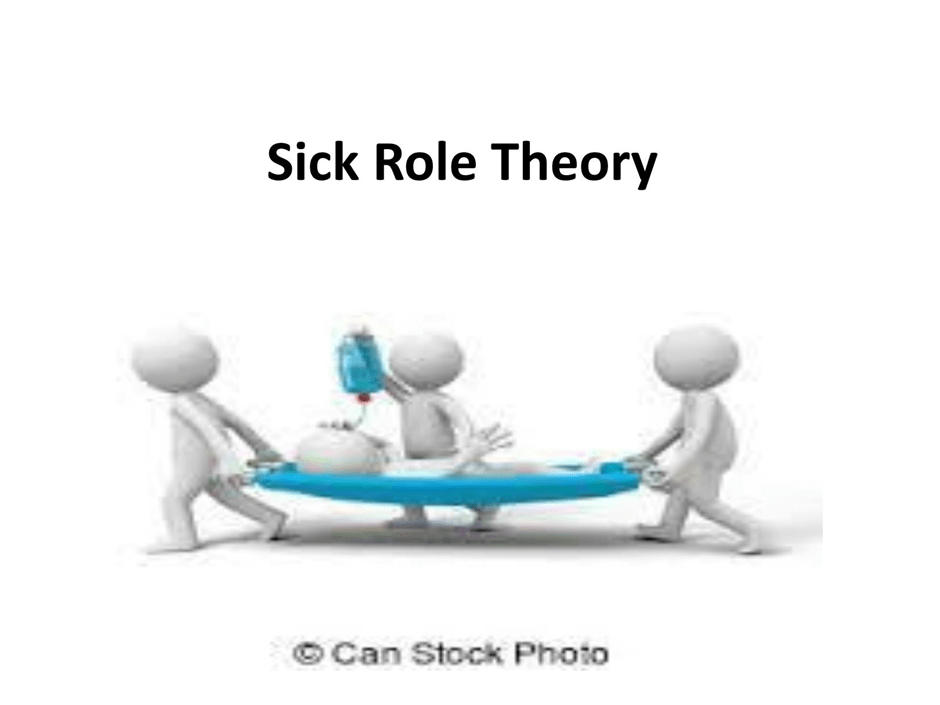
The “Sick Role” theory was developed in 1951 by Talcott Parsons. This is a concept in medical sociology. The theory states that anyone suffering from severe illness has a distinct set of rights and roles than someone who is well.

Let us review this in relation to human capital. Loss of human capital can be due to diverse reasons, such as sickness, injury, mental decline, unemployment, or the inability to keep up with innovation. We can easily see how sick role and loss of human capital may be viewed as closely interrelated.

Let us try to understand the underlying dilema of a society from an individual’s perspective which could be capitalist or socialist in orientation. Imagine you are now fit and well and are serving as an engineer, academic etc. Your role would have been what your profession dictates. The moment you are unwell for distinct reasons, your new role is a “sick role.”  Employers would view this as acceptable, as long it is not for a long term, and it is not affecting their “capital.”  If the sickness is a long-term condition, then the relationship between employer and employee, and between an individual and society becomes problematic.

The scenario that is painted here is not hypothetical. Think of the recent global pandemic (Covid-19). A vast number of people are suffering from “long COVID.”   If one reviews how differently various governments and enterprises have viewed long COVID and have tried to tackle it, the notion of “sick role” in a contemporary context becomes interesting, intriguing, and worrisome. The human capital dimension of sick role becomes predominant and sick people then transforms into mere commodities that are no longer worthy of use. The worst scenario is when even family members are no longer supportive of your long-term sick role. In this world of modernity and capitalism, your new role as a long-term sick person is not tenable.