Offers succinct commentary on topical issues that cut across both rich and poor countries. Entails critical insights on poverty, inequality, health, macro-policies and many more
The ultra-orthodox Jews (or Haredim) now account for 13.5 percent of the Israeli population, but in about 40 years, this is projected to increase to 31.3 percent if the exceptionally high fertility rates of Haredi females are maintained. Haredi Jews hardly mix with other Jews and have views and values that are incompatible with the secular and Zionist character of Israel. More importantly, Haredi men have rather low employment rates and the highest poverty rates. Most children of the Haredi community go to specially designated schools that shun the core curriculum of English, Maths and Science. Because of their growing size, Haredi parties exercise considerable political power which is likely to grow over time. This enables them to sustain the required budgetary support from the government that allows Haredi lifestyles to be sustained. Under a business-as-usual scenario, Israel could become a poorer, less productive economy, given that a large part of Israeli society will consist of Haredi men and women that will impose a major fiscal burden on the state. The political leadership might not be able to break out of the status quo if it remains addicted to ‘forever wars’ as a way of subverting the aspirations of Palestinian statehood and thus neglect the challenges posed by Israel’s demographic transformation.
Israel started its life as an independent nation by engaging in ethnic cleansing or ‘nakba’ as the Palestinians call it. It was forcefully done, but in the Israeli imagination, it became a choice-driven process. As John Mearsheimer, the redoubtable politician of Jewish heritage noted recently, ‘voluntary’ ethnic cleansing is the only ‘final solution’ – a land for Jews and Jews only, where there is no trace of indigenous Palestinians as they will have all moved to other neighbouring Arab countries. Hence, there is no need to engage in dangerous conversations on a ‘binational ‘ state of Israel-Palestine or two states of Israel and Palestine embodying peaceful co-existence.
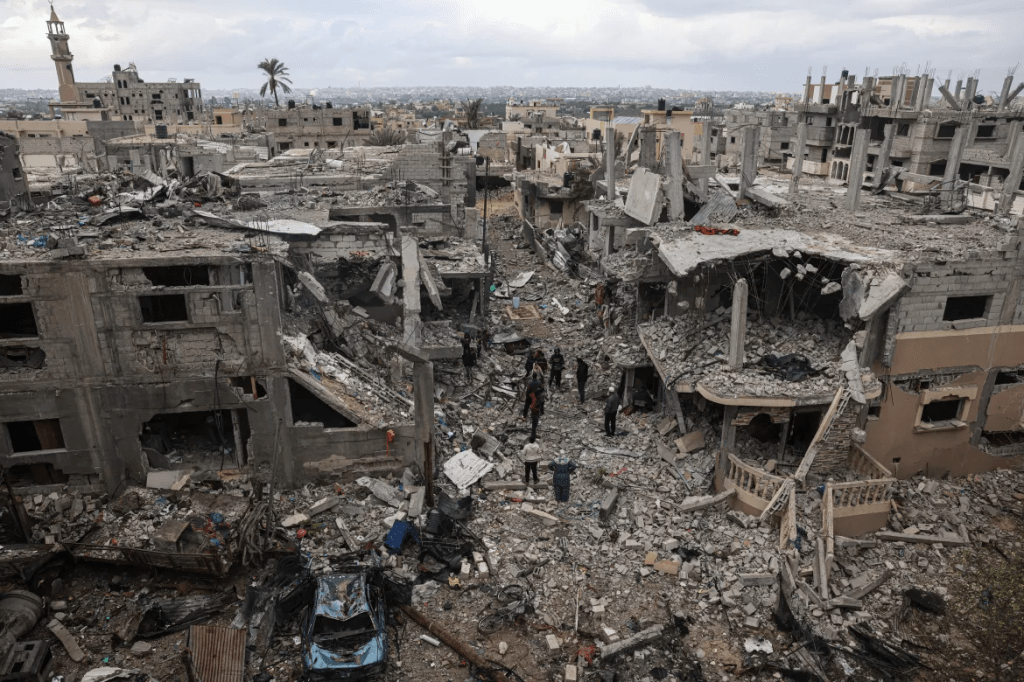
The prized goal of voluntary ethnic cleansing has not happened. What has emerged is a dystopian world in which a highly militarized, ethno-nationalist, settler-colonial state brutally subjugates Palestinians while pining for the pipe dream of peaceful ethnic cleansing. The latest genocidal war on Gazans by Israel – admittedly in retaliation against the October 7 attacks by Hamas – is the latest example of this dystopian world that captures the bitter reality of a nation that has forsaken its future for ‘forever wars’ against a weak and largely defenceless enemy that it finds difficult to vanquish. It is Hamas today, but it could morph into another entity tomorrow.
As the Washington Post’s Ishaan Tharoor has emphasized, Israel is facing growing global isolation and is boxed into a corner. The United States continues to be Israel’s cheerleader (what ‘genocide’? there are no ‘red lines’), but several Western allies that meekly followed ‘follow-the-leader’ in the past are quietly eschewing this shameful strategy. Many EU nations, and dependable allies like Australia, have voted in favour of UN resolutions seeking a long-term ceasefire to stop the wanton bloodshed in Gaza. Many of these very countries have voted in favour of a UN resolution to grant Palestine full UN membership. Ireland, Norway and Spain have fully recognized the Palestinian state a few days ago.
“Toddlers go up in flames, and our Israeli public celebrates…that’s what our hell looks like…Israel has such a strong desire for revenge that it is slowly sinking into a dark abyss, hand in hand with the ruins of Gaza”.
 Reflections on development and governance